
The market is selling off. But what is actually happening?
Is this just panic? Or are overleveraged markets starting to unwind?
Sharp declines always trigger the same reactions. Headlines get louder. Social feeds get emotional. Everyone searches for a single cause.
Inflation.
Rates.
Geopolitics.
AI cooling off.
But beneath the narrative, something more structural can be at play.
When markets are overleveraged, downside moves don’t just reflect fear. They reflect positioning being unwound. And that distinction matters.

Because emotional selling fades with sentiment.
Mechanical selling resolves when leverage resets.
What “overleveraged” really means
An overleveraged market simply means that a significant number of participants are using borrowed capital, margin, or derivatives to amplify returns.
In rising markets, leverage enhances gains and boosts confidence. During declines, however, it amplifies losses and forces action.
When prices fall:
- Margin requirements increase
- Positions get liquidated
- Additional selling pressure emerges
This feedback loop can accelerate downside volatility.
For example, US margin debt peaked above $900 billion in 2021 according to FINRA data. During subsequent corrections, leveraged positioning contributed to sharper market swings as exposure was reduced.
Leverage does not cause volatility on its own.
It magnifies existing moves.
Why leverage builds during strong markets
Leverage does not accumulate in panic. It builds in optimism.
Extended rallies, strong earnings momentum, dominant narratives such as artificial intelligence or sector leadership often create a sense of structural strength. Risk feels manageable. Drawdowns seem temporary.
In recent years, retail options activity reached record levels according to CBOE statistics, with short-dated options becoming increasingly popular. These instruments offer high exposure with limited upfront capital, making them attractive in bullish phases.
Behaviorally, this aligns with well-documented patterns:
- Recency bias reinforces confidence in recent trends
- Overconfidence increases position sizing
- Herd behavior normalizes elevated risk-taking
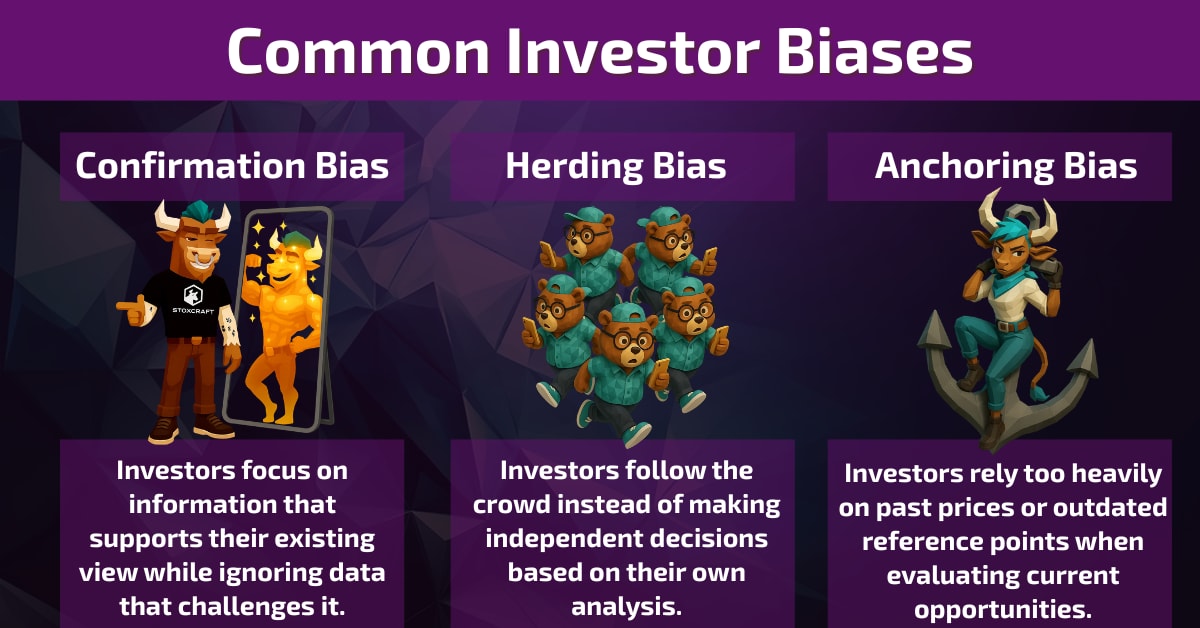
These cycles are explored in depth inside the Investment Psychology section of the Stoxcraft Academy.
Markets are not purely driven by fundamentals.
They are influenced by collective behavior layered on top of financial structure.
Why selloffs can accelerate quickly
Market rallies tend to develop gradually as capital flows in. Selloffs, particularly in leveraged environments, can unfold much faster.
The difference lies in compulsion.
Buying is discretionary.
Liquidation is not.
When leveraged positions breach risk thresholds, selling becomes mandatory rather than strategic. Liquidity thins, volatility rises, and price swings become more pronounced.
Recent high-momentum names such as Nvidia, Tesla or Coinbase have repeatedly shown how quickly strong rallies can reverse. In many of these phases, the speed of the move reflected positioning adjustments and options exposure unwinding rather than a sudden collapse in long-term fundamentals.









This does not automatically imply systemic instability. In many cases, it signals a positioning reset rather than a fundamental collapse.
Understanding that difference helps investors avoid reacting emotionally to structural adjustments.
Is this correction emotional or structural?
Every decline feels unique in real time. The catalysts differ, the headlines change, and sentiment shifts rapidly.
However, from a structural perspective, markets often move through familiar phases:
- Expansion of optimism
- Increased positioning and leverage
- A catalyst or momentum shift
- Deleveraging and stabilization
The key question for long-term investors is not where the exact bottom lies.
It is whether recent upside was primarily driven by improving fundamentals or by expanding positioning.
If gains were heavily leverage-driven, the unwind can temporarily overshoot on the downside. That does not necessarily alter long-term growth prospects, but it can intensify short-term volatility.
For investors navigating uncertainty, revisiting broader strategic discussions such as Should you invest now or wait? The timing myth can provide perspective beyond short-term fluctuations.
What this means in the bigger picture
Leverage cycles are not anomalies. They are recurring features of modern markets.
Confidence expands exposure.
Exposure increases fragility.
Fragility amplifies corrections.
Over time, excess positioning is reduced and markets stabilize.
This is why Risk and Portfolio Management is less about predicting headlines and more about understanding structural dynamics.
Markets constantly reprice expectations.
They also reprice positioning.
When leverage is elevated, those adjustments happen faster and feel more dramatic. But they are often part of a broader cycle rather than a permanent shift.
The question is not whether volatility will occur.
The question is whether you understand what is driving it.