What makes an AI stock strong right now
Everyone has an opinion on AI stocks. Almost nobody backs it with numbers.
A strong AI stock needs three things working together. Real revenue growth, healthy margins, and a price that hasn't run too far ahead of the business.
Hype alone won't hold up a stock price for long.
Three traits separate a real AI stock from a story stock:
Every stock below gets run through this filter, using Stoxcraft's Health, Performance, and Risk Scores.
2026 has turned into a real stress test. AI data center spending keeps climbing toward the trillion-dollar mark. Some of the biggest AI names have gone quiet on the chart anyway.
That gap between spending and stock price is exactly why a data-first screen helps now.
The AI stocks the data flags right now
Four names keep showing up when the screen runs. Some are familiar. One might surprise you.
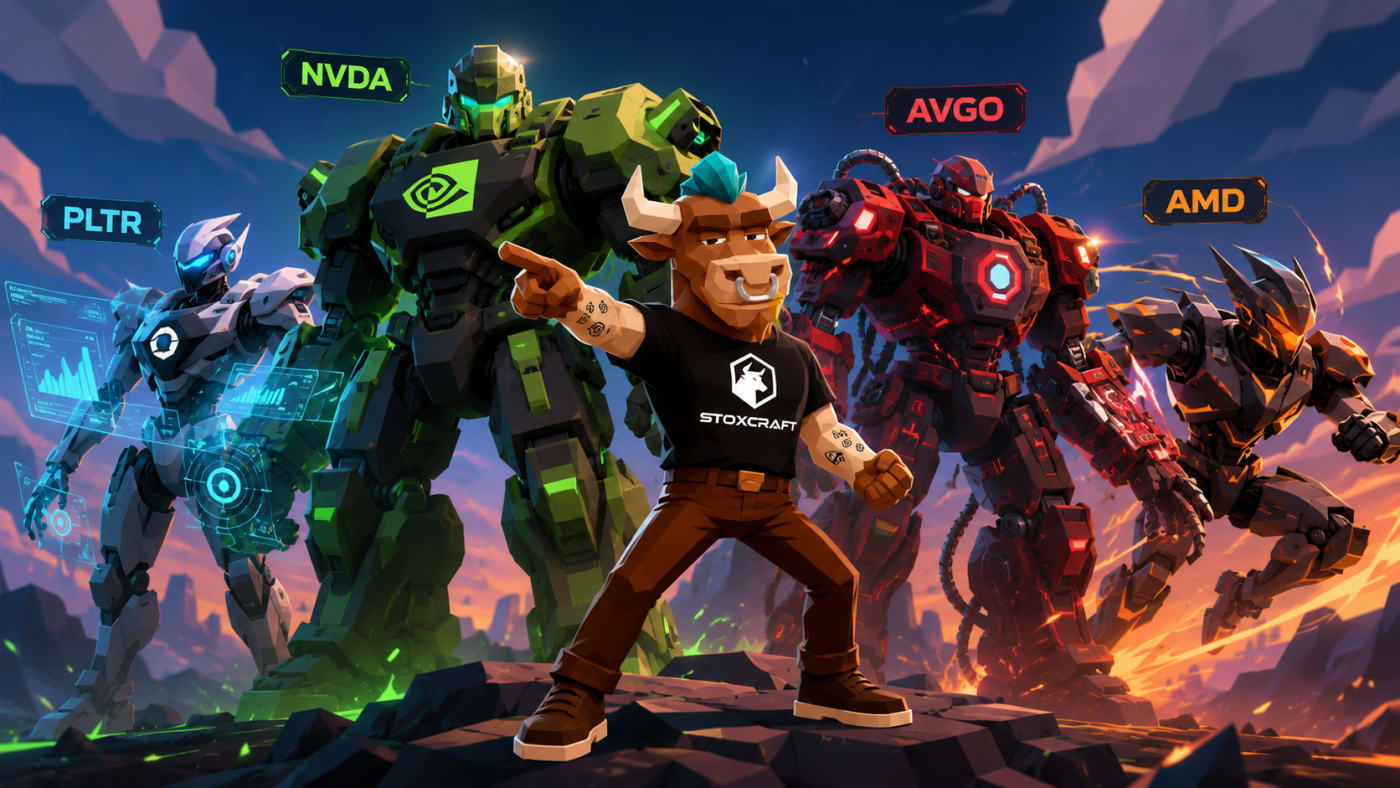
Nvidia (NVDA) is the obvious starting point. So are Microsoft (MSFT) and Alphabet (GOOG), mostly because of how much AI infrastructure they've built.
Analysts expect these three to keep leading AI stocks in 2026.
Size alone doesn't guarantee opportunity. Treat this as data context, not a buy call.
Nvidia (NVDA): the industry standard has a quieter year
Nvidia posted $215.9 billion in fiscal 2026 revenue, up 65% from a year earlier. Gross margin sits near 75%. Best in the sector, easily.
Yet Nvidia stock is up just 5% in 2026, trailing the S&P 500's roughly 10% gain. The market has already priced in a lot of the AI story.
The Health Score tells a different part of the story: 8.6. Industry-leading free cash flow and margins most peers can't touch drive that number.
Performance Score sits at 7.8. Years of outsized returns built that number, even though 2026 momentum has cooled.
Risk Score comes in low, at 4.5, meaning below-average risk for a stock this size. Add it up and Nvidia lands a 4.5-star Overall Rating.
The board also approved an $80 billion buyback this year and raised the dividend. Analyst consensus stays firmly bullish, with dozens of buy ratings still on the stock.
Palantir (PLTR): explosive growth, volatile stock
Palantir's revenue grew 85% year over year in the first quarter of 2026. Its fastest pace since going public.
US commercial revenue jumped 133% over the same stretch.
The stock hasn't fully rewarded that growth. Palantir is down roughly 20% year to date in 2026.
That's even after management raised full-year guidance to $7.65 billion.
Business and stock price are telling two different stories here. Performance Score sits at 8.9, among the strongest names in Stoxcraft's coverage.
Risk Score runs hot too, at 7.9, meaning high volatility. The price still assumes years of future growth ahead.
Overall Rating: 4 stars, held back mainly by that risk profile.
Broadcom (AVGO): the AI networking powerhouse
Broadcom's AI semiconductor revenue hit $10.8 billion last quarter, up 143% year over year. Total revenue grew 48%, to $22.2 billion. Big numbers, back to back.
Several major cloud and AI companies now buy custom chips from Broadcom. Hyperscalers building their own accelerators, mostly, instead of leaning only on Nvidia.
Management still expects AI semiconductor revenue to clear $100 billion by 2027. Unchanged, even as growth keeps accelerating.
Health Score lands at 7.9. Strong free cash flow. Margins that keep expanding.
Performance Score comes in at 8.3, built on several straight quarters of consistent execution. Risk Score sits at a moderate 5.1.
Overall Rating: 4.5 stars.
AMD: the closer chasing Nvidia's lead
AMD's data center revenue grew 57% year over year in the first quarter of 2026. That's $5.8 billion.
New chips launching later this year target a bigger slice of the AI accelerator market. A real shot at closing the gap. The lineup could add billions in data center revenue by year end.
AMD has locked in multi-year AI infrastructure deals with Microsoft Azure and Meta AI. That gives the stock more revenue visibility than any previous cycle.
Performance Score sits at 7.2, solid but less consistent growth than Nvidia or Broadcom put up. Health Score comes in at 6.8, margins improving but still thinner than the sector's biggest names.
Risk Score lands at 6.3, moderately elevated. Still the underdog.
AMD's execution risk runs higher than an established leader's. Overall Rating: 3.5 stars.










How to screen for your own AI stock picks
These four names won't stay put forever. Scores shift constantly as new earnings and price data roll in.
Building a personal AI stock screen isn't complicated. Start with a few filters and build from there:
The Stoxcraft Screener runs this exact process across the full stock database, refreshing as fresh numbers land.
Today's picks aren't permanent. A stock with a strong Health Score now can slip fast if margins erode next quarter.
Risk Score works the same way. A calm chart today says nothing about next earnings season, especially in a sector moving this fast.
For more on this cycle, Stoxcraft covered the AI boom's ripple effects across global markets. The chipmakers shaping the next tech decade covers the hardware side in more depth.
Why the AI trade should start with a screen, not a stock
Every AI stock list you'll read this year leans on somebody's opinion. The scores don't care about opinions.
They care about revenue, margins, and price.
Nvidia, Palantir, Broadcom, and AMD all clear the bar today, each for its own reasons. That won't stay true forever.
Run your own screen before buying anything. The names topping the list next quarter might not be the ones sitting there now.