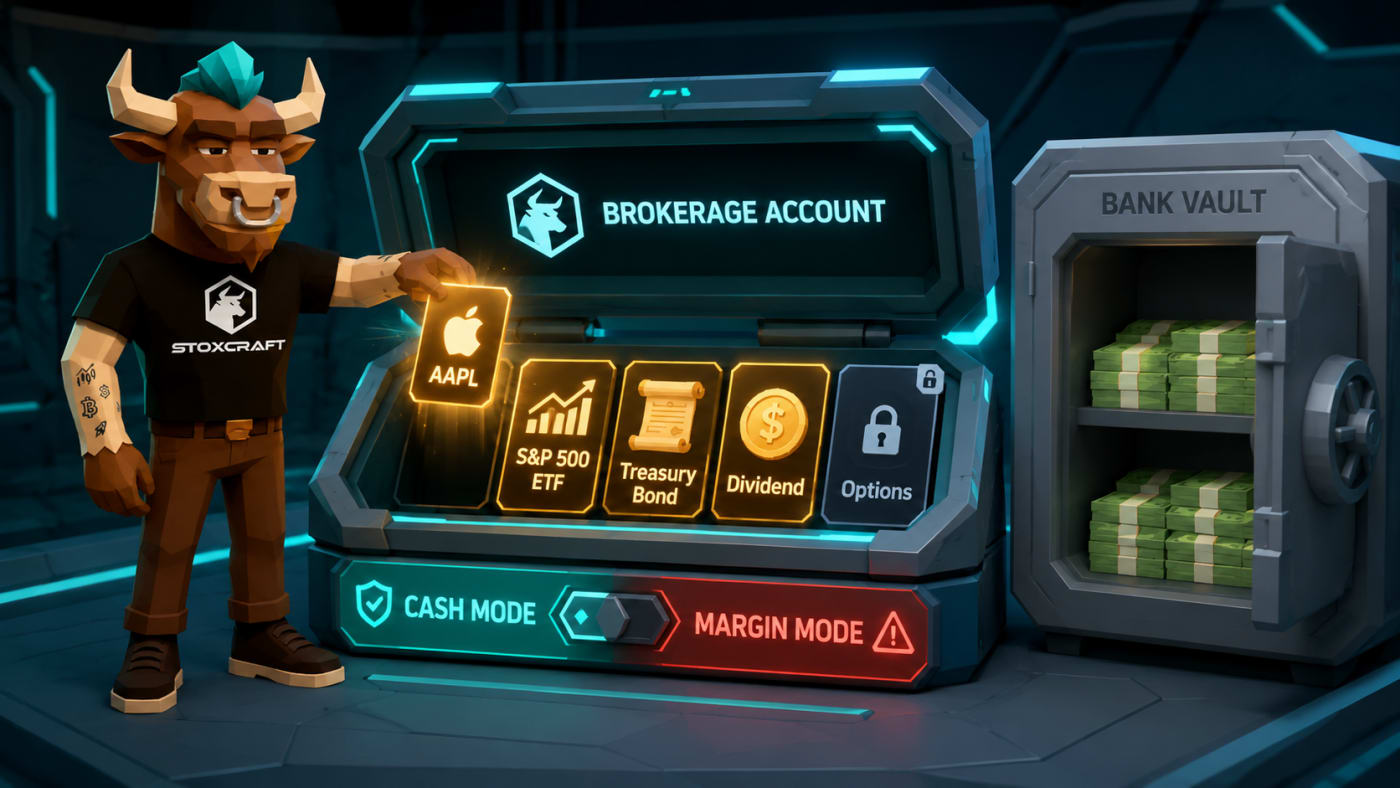
A brokerage account is not a fancier checking account. It is the account that actually lets you buy a share of Apple (AAPL), an S&P 500 ETF, or whatever ticker your group chat is yelling about this week.
Most people think they are "investing" the moment their paycheck hits a savings account. They're not.
A recent Yahoo Finance analysis found only about 35% of Americans in their 60s hold a taxable brokerage account, even though most of them are invested through a 401(k) or IRA. That gap matters.
A retirement account is locked behind rules and penalties. A brokerage account is yours to use whenever you want.
Here is what a brokerage account actually is, how it is built, and how to open one without stepping on the mistakes that wreck most beginners.
How a brokerage account differs from your bank account
A bank account holds cash. The Federal Deposit Insurance Corporation insures up to $250,000 of it, so if your bank collapses, your money doesn't disappear.
A brokerage account holds investments instead of cash, and it's covered differently. The Securities Investor Protection Corporation protects your assets if the brokerage itself fails, but it doesn't protect you from the market dropping.
That distinction trips people up constantly. Nobody expects their savings account to lose value overnight.
A brokerage account can, because the money inside it isn't sitting still. It's out buying pieces of companies.
If you are still deciding whether to park spare cash in savings or push it into the market, the breakdown in saving vs investing: what beginners get wrong is worth reading before you fund anything.
Cash accounts vs margin accounts: what is the difference
Every brokerage account falls into one of two buckets. Pick wrong and you either limit yourself unnecessarily or take on risk you did not sign up for.
What you get with a cash account
A cash account is exactly what it sounds like. You pay full price for everything you buy, in cash you already have.
No borrowing, no interest charges, no risk of owing your broker money. For most beginners, this is the correct starting point. It's impossible to lose more than you put in.
What you are borrowing with a margin account
A margin account lets you borrow money from your broker to buy more than your cash balance allows. That borrowed money is called margin, and it isn't free.
You pay interest on it, and you can lose more than your original deposit if the trade goes against you. Federal Reserve Regulation T caps that borrowing at 50% of a security's purchase price, but your broker can set a stricter limit than that.
Most brokers default new accounts to margin unless you specifically request cash. Check the account type before you sign anything.
What a brokerage account costs beyond commissions
Commissions on US stock trades are mostly dead. Every major broker dropped them years ago. That does not mean trading is free.
Every trade still crosses the bid-ask spread, the small gap between what buyers are willing to pay and what sellers are asking. It is invisible on your statement, but it is a real cost baked into the price you get filled at. ETFs and mutual funds also carry expense ratios, an annual fee taken directly out of the fund's returns whether you notice it or not.
None of this is dramatic on its own. Over decades, small percentages compound into real money. The true cost of investing fees skill breaks down exactly how much a 1% fee difference costs you over 30 years, and the number is bigger than most people expect.
How to open a brokerage account step by step
Opening one takes less effort than people assume. The process looks roughly the same at every major broker:
- Pick a broker and confirm it offers the account type you actually want
- Verify your identity with a government ID and your Social Security number
- Choose cash or margin, and choose individual or joint if that applies
- Link a bank account and transfer your first deposit
- Place your first trade once the funds settle
Most brokers approve accounts within a day. Funding can take a few business days to clear, especially for a first deposit. Once you are funded, the Stoxcraft Screener is where you actually go to research what to buy instead of guessing.
The beginner mistake that torches new brokerage accounts
Funded accounts do not fail because of bad brokers. They fail because someone dumps their entire deposit into a ticker they saw trending, with zero idea what the company actually does.
Hype doesn't care about your account balance. A stock can rip 40% on a headline and give it all back the next week, and beginners who buy at the top with no plan are the ones left holding it.
Do the research before you place the trade, not after.
This is exactly the trap covered in 5 investing mistakes every beginner should avoid. The getting started: avoiding mistakes skill goes even deeper on building a habit that does not depend on willpower.
What happens after you fund the account
Money sitting in a brokerage account does nothing by itself. You still have to place a trade, and how you place it matters.
Market orders vs limit orders
A market order buys or sells immediately at whatever price is currently available. It's fast, but you don't control the exact price you get.
A limit order lets you set the exact price you're willing to pay or accept, and the trade only executes if the market reaches it. Beginners buying a small position in a stable stock usually don't need to overthink this. Beginners chasing a volatile ticker absolutely do.
Getting paid: how dividends land in your account
Some companies pay shareholders a dividend, a cash payment for simply holding their stock. It lands directly in your brokerage account on the payment date, and most brokers let you reinvest it automatically instead of letting it sit as idle cash. A first portfolio built around steady, established names, say Apple (AAPL), Microsoft (MSFT), Coca-Cola (KO), and Johnson & Johnson (JNJ), often includes at least one dividend payer for exactly this reason.









A brokerage account only works if you use it
An unfunded or unused brokerage account is just an empty folder. The account itself does not build wealth. What you buy inside it, how much you pay to hold it, and whether you panic-sell the first time it dips, that is what actually decides the outcome.
Open the right account type, understand what it costs, and treat your first trade as a decision, not a reaction. Everything else builds from there.