The basic mechanics of a reverse stock split
A reverse stock split is a corporate action that cuts the total number of a company's outstanding shares. Each remaining share becomes worth proportionally more. The ratio tells you exactly how the math works.
Say a company executes a 1-for-10 reverse split. If you owned 1,000 shares before, you now own 100. If those shares traded at $0.50 each before, they now trade at $5.00. Your total investment value stays the same. Only the packaging changed.
The market capitalization of the company does not change. Market cap equals share price multiplied by shares outstanding. When the split cuts shares by 10 and raises the price by 10, the product stays flat. It is like swapping ten $1 bills for a single $10 note.






How reverse split ratios work
Reverse split ratios are always expressed as a consolidation: shares surrendered to shares received.
- A 1-for-2 split halves your share count and doubles your price.
- A 1-for-10 converts ten shares into one and multiplies the price by ten.
- A 1-for-20 is more aggressive, used when a stock has lost most of its value.
The bigger the ratio, the more urgent the underlying problem. A 1-for-200 split is a company in serious distress.
What reverse split ratios signal about a company
A small ratio like 1-for-2 or 1-for-3 can be routine. A 1-for-20 or higher is a clear signal that the share price has cratered. Companies do not reach for extreme ratios unless they face a real threat of violating exchange listing rules. The ratio itself is diagnostic. It tells you something about the severity of the situation before you read a single line of the company's financials.
Why companies do a reverse stock split
Companies turn to a reverse stock split for specific reasons. None of them point to a business that is thriving.
Avoiding delisting from Nasdaq or NYSE
Both Nasdaq and the New York Stock Exchange require listed companies to keep their share price above $1.00. If a stock closes below that mark for 30 consecutive trading days, the exchange issues a deficiency notice. The company gets 180 days to fix it. A reverse split is the fastest way to push the price back above the threshold.
Allbirds (BIRD) executed a 1-for-20 reverse stock split in September 2024 to stay listed on Nasdaq after falling below the minimum bid price. Sirius XM Holdings (SIRI) completed a 1-for-10 reverse split the same month. Sirius XM's case was different. It was not at risk of delisting. The goal was to bring its share price above the level where many institutional funds refuse to buy.
Attracting institutional investors
Many large funds have internal policies about minimum stock prices. A stock at $0.80 can be disqualified from consideration entirely. A reverse split clears that barrier on paper. Whether institutions actually start buying depends on the company's fundamentals, not the new share price.
Simplifying the capital structure
Some companies use a reverse split to reduce a swollen share count. When a company raises money through repeated dilutive financing rounds, shares can pile up into the billions. A reverse split cleans this up. It can also improve earnings per share optics, since the same profit divides across fewer shares.
Stock split vs reverse stock split
These two corporate actions move in opposite directions. The signals they send are completely different.
A regular forward split increases the share count and lowers the price. Companies do this when the price has climbed so high that everyday investors struggle to buy in. This happens from a position of strength.
A reverse stock split reduces the share count and raises the price. Companies do this when the price has fallen low enough to threaten listing status or lose institutional interest. This typically happens from a position of weakness.
There are exceptions. Some healthy companies use reverse splits as part of a planned restructure. But those are outliers. The pattern that repeats most often is that reverse splits follow stocks that have been under sustained pressure.
What a reverse split does not do
This is what many investors miss. A reverse split does not:
- Increase the company's market cap or total value
- Fix the underlying financial problems causing the share price to fall
- Improve revenue, margins, or cash position
- Change your percentage ownership in the company
- Guarantee the share price will hold above the exchange's minimum threshold
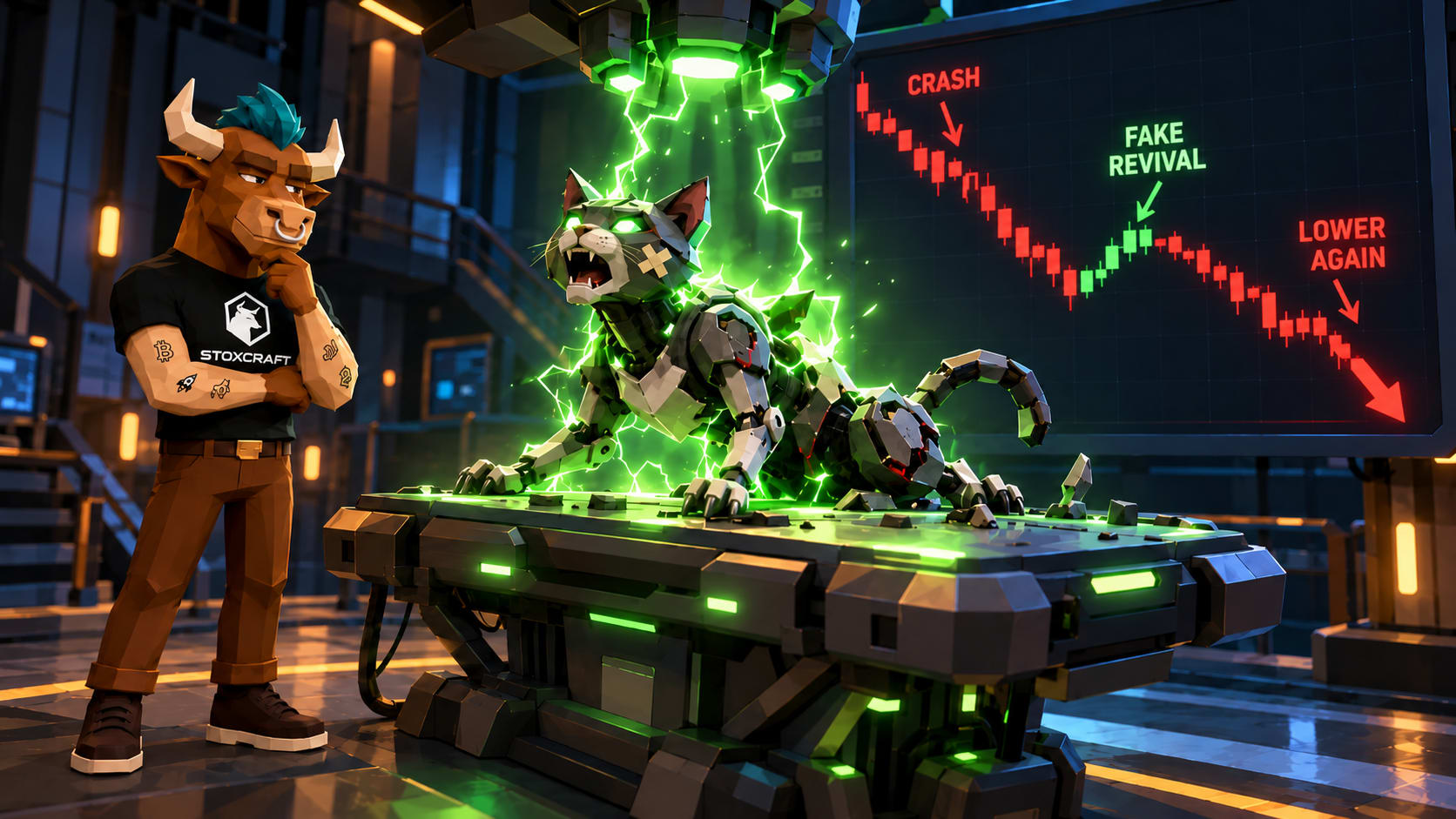
The float shrinks and the price rises. But if the business is still burning cash and missing targets, the higher share price is a facade. Studies show more than half of companies that do reverse splits underperform the broader market afterward. The price bump does not last unless operations actually improve.
How investors should read a reverse stock split announcement
Not every reverse split signals imminent collapse. But none of them are neutral news. Here is how to break down what you are looking at.
Check the reason behind the split
There is a clear difference between splitting to avoid delisting and splitting as part of a strategic restructure. If the announcement explicitly mentions "compliance with listing requirements," that is a red flag. If the company has strong cash reserves and growing revenue, the same action carries a different weight.
Look at the company's fundamentals before reacting
A reverse split does not meaningfully improve earnings per share. It adjusts the raw share count, but the economic reality stays the same. Check revenue trends, cash burn, debt levels, and forward guidance. If those are deteriorating, the reverse split is cosmetic surgery on a business that needs real treatment.
Watch post-split price action closely
Volatility tends to spike around reverse split dates. Short sellers often build positions in companies that have just announced a split, betting the price will slide back down. If the market reads the action as a distress signal, that pressure can accelerate quickly. Do not assume the new higher price will hold.
The regulatory shift that makes reverse splits harder to repeat
In January 2025, the SEC approved tighter rules for both Nasdaq and NYSE affecting how companies can use reverse splits. Under the new rules, if a company has already done a reverse split in the past year and falls below $1.00 again, it gets no grace period. Nasdaq will immediately begin delisting procedures.
The same applies if a company has run multiple reverse splits with a cumulative ratio of 250-to-1 or more over two years. This eliminates the strategy of using repeat reverse splits every time the price collapses. These new rules followed a record 464 reverse splits by Nasdaq-listed companies in 2024 alone, and 495 reverse splits across listed companies in 2023. The exchanges had seen enough.
For companies now, the reverse split is no longer a reliable safety net. It must be followed by real operational improvement, not just an adjusted share count.
How different investors are affected by a reverse split
The impact of a reverse split varies depending on how you hold the stock. Here is what each type of investor should know.
Long-term investors who own fundamentally strong businesses should not panic at a reverse split announcement alone. Your percentage ownership in the company does not change. If the business grows revenue and improves operations, the split is a footnote.
Short-term traders need to be more careful. Liquidity drops after a reverse split because fewer shares are circulating in the market. Fewer shares mean wider bid-ask spreads and sharper price swings. Getting in and out of a position becomes harder and more expensive.
Retail investors in speculative or meme stocks face the most risk. These stocks often see a brief rally on the reverse split news before the price slides back. GameStop (GME) became a case study in how retail sentiment can temporarily overwhelm fundamentals. For most small-cap stocks announcing a reverse split, post-split performance tends to disappoint.
How a reverse split is processed in your brokerage account
When a company announces a reverse split, it sets an effective date. On that date, your brokerage automatically adjusts your holdings. You do not need to take any action. The shares consolidate and the new price appears in your account.
If you hold a number of shares that does not divide evenly into the split ratio, you receive a cash payment for the fractional share. In a 1-for-10 split, if you owned 15 shares, you would receive 1 full share plus cash for the 0.5 fractional share. That cash uses the closing price before the effective date.
Reverse splits apply equally to all shareholders. Authorized share counts and par value are typically unchanged. Only the outstanding share count and price are adjusted.
Where reverse splits fit in the bigger picture of stock investing
A reverse split is one tool in a company's toolkit. In the hands of a well-run business doing a deliberate restructure, it can be neutral or mildly helpful. In the hands of a struggling company with no credible growth plan, it is a delay tactic.
Exchanges now have stronger rules that force companies to fix the underlying business rather than rely on accounting adjustments to stay listed. That is a positive development for investors. It closes a loophole that let weak companies remain on major exchanges far longer than their fundamentals deserved.
If you see a reverse split announcement, your instinct should be to dig deeper into the business, not trade faster on the price change. The share math changes on the surface. The company does not.
For a stronger foundation on how to evaluate and manage your positions, see the Stoxcraft guide on 5 investing mistakes every beginner should avoid.