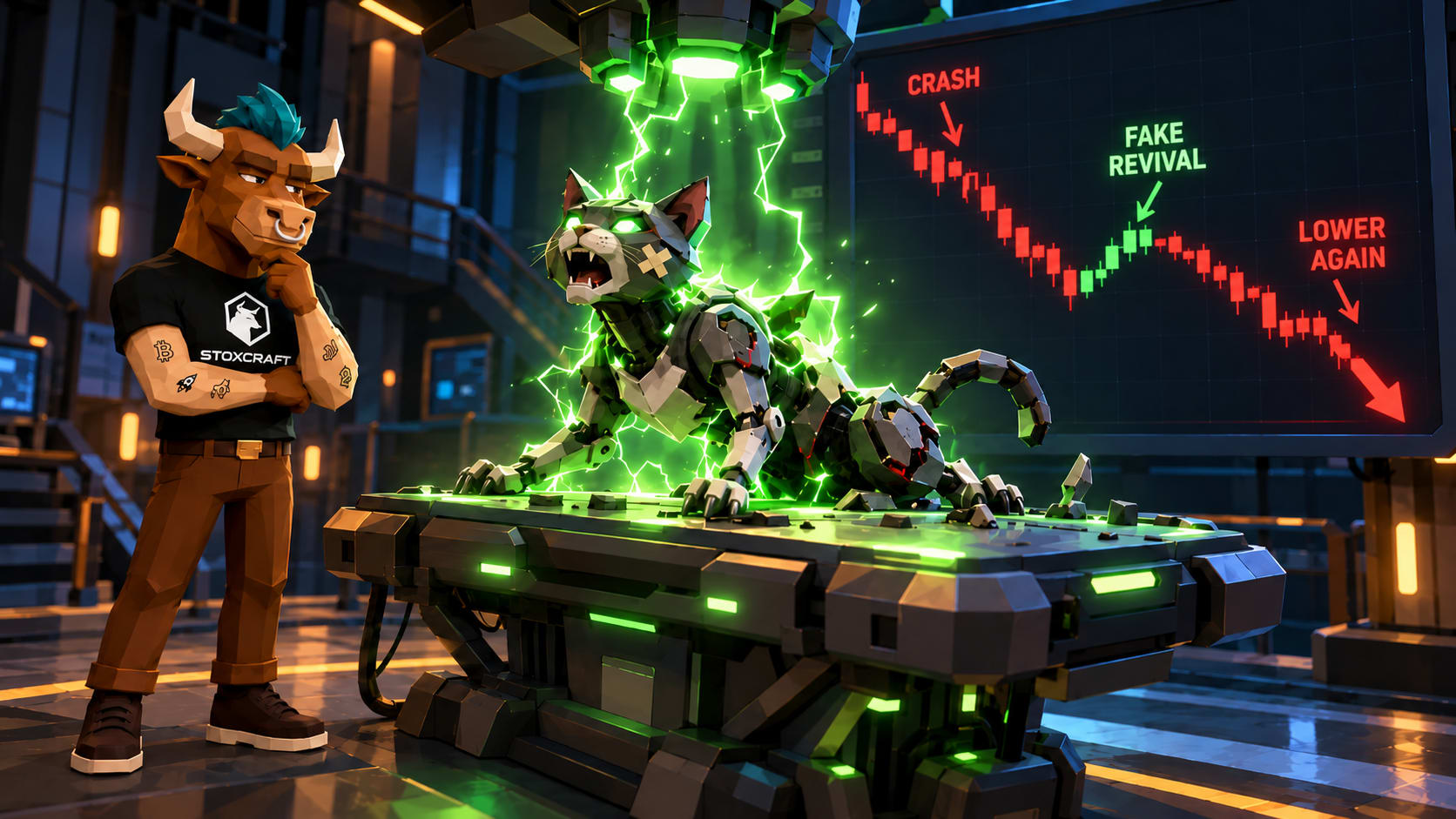
Pump and dump stocks follow a simple script. Someone builds a position in a cheap, thinly traded stock. They hype it hard, then sell into the frenzy they created.
This isn't a new trick. It's one of the oldest scams in finance. Social media just made it faster.
How a pump and dump scheme works
The pump phase
A promoter quietly builds up shares in a small, unknown company. The stock is cheap and few people are watching it. That's exactly the point.
Then the hype starts. Fake news, exaggerated claims, or a flood of social posts creates a buying frenzy. It has nothing to do with the actual business.
The pump-and-dump label describes both halves of the con in one term. In one 2025 case, a jury found a Twitter promoter liable for hyping stocks to his followers. He did it for two straight years before the SEC caught him.
Bloomberg's analysis found cumulative market cap losses across roughly 60 Nasdaq-listed firms. All were targeted by social media stock manipulation. That's not a handful of rogue operators.
The dump phase
It's a repeatable playbook. Once the price is inflated, the promoter sells fast. They stop hyping the stock the moment their own shares clear.
Without new buyers, the price collapses. Anyone who bought during the hype phase is left holding a stock worth pennies. This is the exit liquidity problem in plain terms.
Someone always needs a buyer to sell into. Too often, that buyer is you.
Federal prosecutors in Chicago recently unwound a scheme tied to a small China-based company. Investigators seized more than $214 million from the operation. Fake investment advisor accounts had promoted the stock online.
Warning signs before the dump
Not every rally is a scam, but certain patterns repeat across real pump and dump cases. Watch for these together, not in isolation. Any one alone could just be coincidence.
- Sudden hype on social media or messaging apps, especially unsolicited tips
- No real news, earnings, or filings behind the price jump
- Trading volume spiking far above the stock's normal average
- Pressure to buy immediately, often with claims of inside information
- A promoter who won't disclose they're being paid to hype the stock
The FBI reported a sharp jump in these schemes. Complaints about ramp and dump fraud rose 300 percent in a single year. Most victims were first contacted through accidental texts or private investment groups.
Some of those groups run on Telegram and Discord, dressed up as exclusive trading communities. If a stranger online tells you exactly what to buy and when, that's not a tip. That's a script.
Want a closer look at how these campaigns spread online? The Academy's guide on how social media moves stocks breaks it down.
Why low-float small caps are the easiest targets
Pump and dump schemes almost never target large, liquid companies. There's a clear reason for that.
A stock's float is the number of shares actually available to trade. A low-float, small-cap stock can be pushed around fast. A relatively small amount of coordinated buying does the job.
A mega-cap stock can't be moved this way. Too many shares trade hands every day. One group alone can't control the price.
Microcap companies also tend to carry thin public disclosure. Less information means fewer people fact-checking the hype in real time. Low float plus low scrutiny makes a stock easy to manipulate.
Some promoted stocks trade only a few hundred thousand free shares. That's small enough for one coordinated group to move meaningfully. A blue chip with billions of shares outstanding can't be cornered the same way.
How to check if a rally is backed by real fundamentals
A real rally and a manufactured one can look identical for a few days. The difference only shows up once you dig past the price chart.
Look for a disclosed, verifiable catalyst
Real moves usually trace back to something concrete. Earnings that beat expectations. A signed contract.
A product launch with actual revenue behind it counts too. If you can't find one specific reason for the jump, treat the move as suspect.
Check the company's numbers, not just the chart
Price action alone tells you nothing about whether the business is sound. Before buying into any fast mover, run the ticker through the Stoxcraft Screener. Check its actual fundamentals before trusting the hype.
A quick look at the stock's Health Score and Performance Score can surface red flags in seconds. A stock with weak cash flow, no revenue, and a fast-rising share price is a mismatch. That mismatch is often the whole story.
The Academy's lesson on signals that hype is peaking covers exactly this pattern.
Your money isn't the crowd's exit plan
Pump and dump schemes rely on one thing above all else. People acting on hype instead of evidence. Take that away, and the scheme has nothing left to work with.
Before buying anything that's suddenly trending, ask a simple question. Who benefits if you buy right now? If the answer is someone about to sell, you already have your answer.