Buying a stock because everyone else is buying it is not research. It is one of the most reliable ways to lose money in markets. The feeling of missing out is real. The instinct to act on it is expensive.
FOMO in investing means buying into a stock, sector, or asset because it is rising fast and everyone seems to be profiting. Not because you studied the fundamentals. Not because the valuation makes sense. Because watching from the sidelines feels wrong.
That instinct is natural. Billions of years of evolution built it. It also happens to be one of the costliest behavioral patterns in modern investing.






Why your brain was built for FOMO
FOMO is not a personality flaw. It is a hardwired response to social signals. Understanding how it works in a market context is the first step to overriding it.
Two forces drive FOMO in investing: how the human brain processes what others are doing, and how social media accelerates that process into something close to real-time.
Social proof and herd behavior in stock markets
Market sentiment is contagious. When a stock is surging, the brain reads it as social proof. Other people appear to know something you do not. That triggers momentum chasing. You buy because they are buying, not because the business justifies the price.
Behavioral economists call this herding. Research into trading psychology shows that most investors optimize for avoiding regret rather than maximizing expected return, and FOMO is regret in advance. It pushes action before analysis, which is the exact sequence that creates a crowded trade.
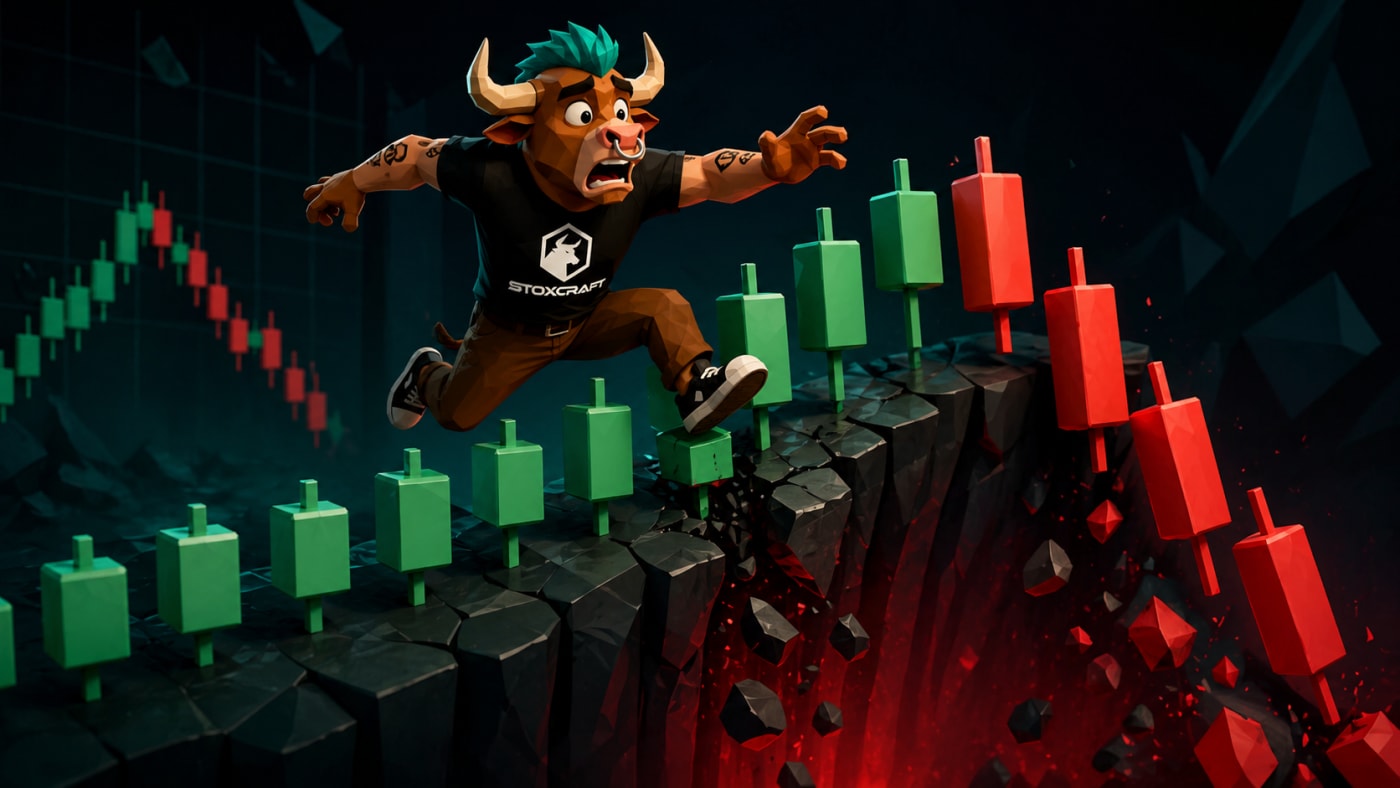
By the time the excitement is loud enough to feel urgent, most of the buyers have already arrived. You are not early. You are the exit.
How social media turned FOMO into a 24/7 problem
Reddit threads, financial TikTok, and Twitter feeds have made herd behavior faster and louder. Stories of 10x returns travel instantly. Stories of accounts blowing up do not. That asymmetry skews your sense of what is normal.
Twenty years ago, you heard about a hot stock over dinner. Now it is trending before breakfast, and by noon your portfolio feels boring by comparison. The emotional pressure is constant. That is new, and it is dangerous.
The hype cycle has always existed in markets. Social media collapsed the timeline from months to days.
Three times FOMO investing destroyed real money
Theory is one thing. The record is clearer. Three episodes from recent market history show exactly what FOMO looks like when the excitement runs its course and who ends up paying the bill.
Each example follows the same arc: a genuine early move, intense media coverage, a flood of late buyers, and a collapse that leaves latecomers holding losses.
GameStop (GME): the meme stock that burned latecomers
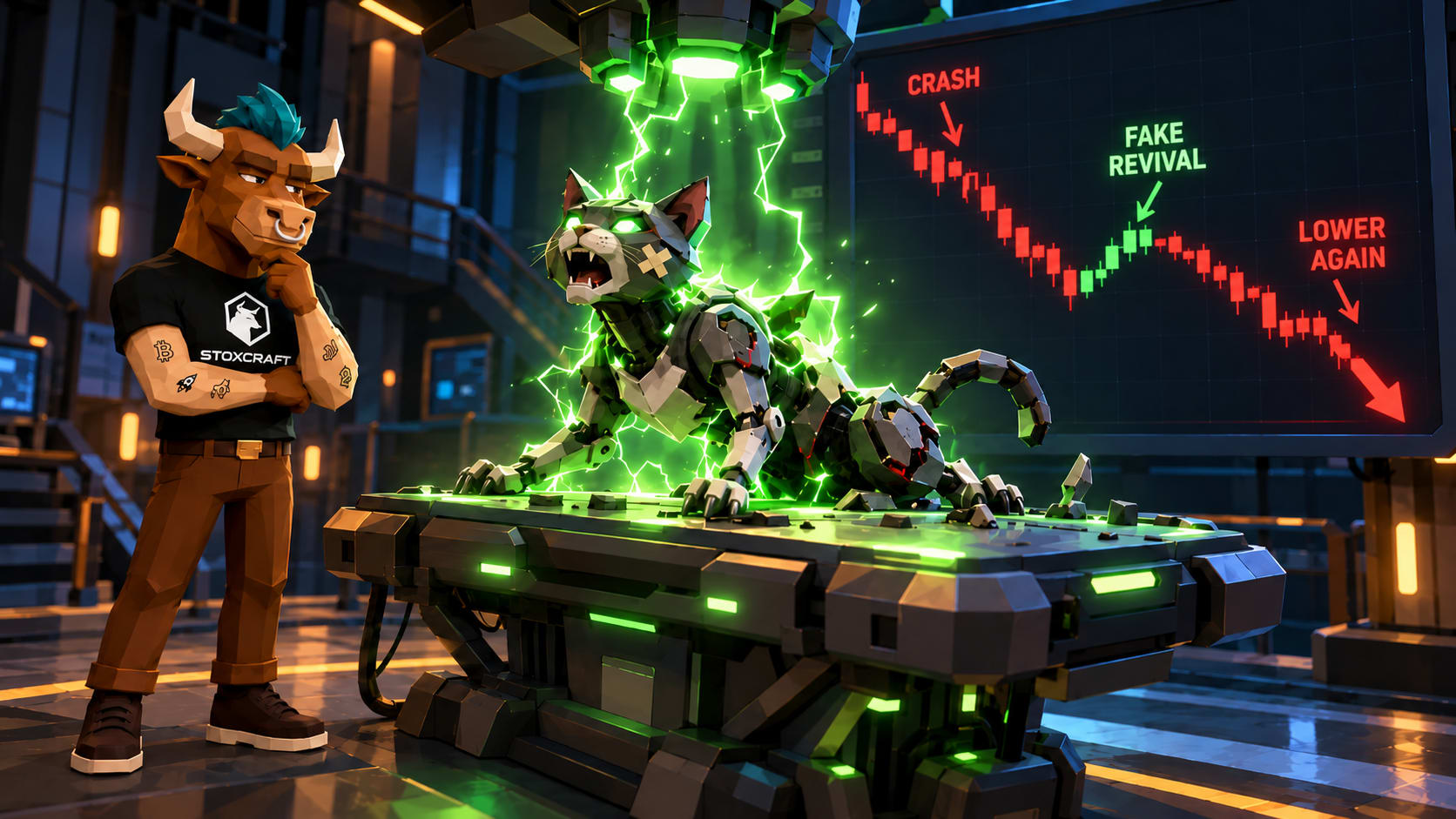
GameStop (GME) is the textbook FOMO case. In January 2021, retail investors on Reddit's WallStreetBets forum drove the stock from $17.25 to an intraday high above $480. That is a rise of more than 1,700% in under two weeks.

Investors who bought GameStop at the FOMO peak lost more than 70% within weeks as the hype collapsed
By February 2, 2021, GME had fallen roughly 80% from its peak. Most retail investors who bought at the height of the frenzy lost the majority of what they put in. Early community members made money. FOMO buyers who arrived late did not. GME trades around $25 today. The hype is gone.
This is what bagholding looks like. You enter a position at peak excitement. The fundamentals were never the reason. FOMO was.
Crypto 2021: Bitcoin at $69,000 and the FOMO wall
Bitcoin peaked at approximately $69,000 in November 2021. By November 2022, it had fallen 78% to roughly $15,476. Most of the people who bought near that peak did so because the price kept going up. They did not want to miss the run. That is FOMO in its purest form.
The drawdown that followed was brutal. The crypto market lost over $1.3 trillion in the first half of 2022 alone, wiping out accounts in weeks. Retail investors who entered at the peak of the hype cycle absorbed most of those losses.
AI stocks in 2023: the hype cycle repeats
The early 2023 AI rally was real. Nvidia (NVDA) delivered genuine earnings growth. But the excitement spread to every company that could mention AI in a press release.
C3.ai (AI) rose nearly three times from January 2023. By August 2023, it had shed 26% in a single month. Investors who entered after the initial move, who felt they were missing the AI moment, paid for the timing. Not for the research. The late entry cost them regardless of the long-term thesis on AI.
How to tell FOMO from a genuine conviction buy
Not every fast-moving stock is a trap. Genuine conviction buys exist. The difference is in how you arrived at the decision, not how the stock is performing.
Here are four questions to run before buying anything that is getting heavy attention:
- Can you explain why you are buying in one clear sentence without mentioning price movement or what others are doing?
- Do you know what the company actually earns, and how that justifies the current price?
- Would you still want to buy this if nobody was talking about it?
- Are you prepared to hold it for 12 months if it drops 30% after you buy?
If you cannot answer yes to all four, you are probably chasing. That does not mean you cannot enter the trade. It means you should size it accordingly and not expect the crowd to carry you. Most meme stock buyers skipped this checklist entirely. That is how they ended up holding losses while the early movers exited.
This kind of pre-decision thinking is one of the core principles in 5 investing mistakes every beginner should avoid.
How the Stoxcraft BuyMeter acts as an emotion filter
The BuyMeter exists to answer one question: is this stock actually an attractive entry right now, or has the market already priced in all the excitement?
It combines three signals into a single score. The RSI measures whether a stock is overbought or oversold. The upside to the 52-week high shows how much room remains to run. Analyst ratings bring an external view on value. The full methodology is available on the Stoxcraft formula page.
Here is what that score tells you about FOMO situations. When sentiment is at its most extreme, the BuyMeter almost always shows a weak entry signal. The RSI is stretched. The upside to the 52-week high has narrowed. The crowd has already moved in.
A BuyMeter score below 35 signals an unattractive entry or an outright sell signal. A score between 35 and 49 is a Hold. The score does not feel the hype. It reads the data and tells you whether the entry price still makes sense. That is the tool that replaces the gut check you cannot trust when FOMO is running at full speed.
The counter-move is straightforward. You feel the excitement around a stock and you look at the BuyMeter. If it reads Hold or Sell while everything around you is screaming buy, pay attention to the score. Not the feeling.
The momentum play archetype: high TrendMeter, high Risk Score
There is a specific combination in the Stoxcraft scoring system that maps almost perfectly onto the FOMO trap. It is called the Momentum Play archetype. It looks like this: high TrendMeter, high Performance Score, and elevated Risk Score.
That profile means the stock is in a strong uptrend, has outperformed its benchmarks, and is carrying elevated volatility and downside risk. It is exciting. It is also fragile.
The high TrendMeter confirms the move is real. The high Risk Score tells you the move can reverse hard. FOMO buyers who enter at peak momentum often experience the worst of both: they arrive after most of the gain and absorb most of the drawdown when the trade unwinds.
Examples from prior market cycles include names like Palantir Technologies (PLTR) and Hims and Hers Health (HIMS) during their high-excitement phases. Strong trend. Elevated risk. Fragile move. When the Risk Score is above 70 and the BuyMeter is below 40, that is a signal to slow down. Not to speed up.
This is where Stoxcraft's scoring does its most useful work. It does not tell you to avoid all momentum stocks. It tells you the actual risk profile you accept when you enter at peak excitement. Most FOMO buyers never see that profile until after they are already in the position.
FOMO will keep cycling. Here is how to stay out of it.
FOMO is not going away. Every market cycle produces a new version: meme stocks, crypto booms, AI plays, and whatever theme comes next. The asset class changes. The psychology does not.
The counter-move is simple to describe and hard to execute in the moment. You need a pre-decision framework you run before the excitement reaches peak volume. The four questions above are a start. The BuyMeter is the quantitative check. The Stoxcraft scoring system is the reality check that runs while the crowd is telling you to hurry up.
If you are making emotionally driven decisions across the board, not just with FOMO but with panic selling, anchoring, and confirmation bias, the top 5 biases that mess up your investor mindset covers each one in detail.
The moment you feel like you are missing out is a signal. It is just not the signal to buy. It is the signal to run your checklist and let the BuyMeter do its job.