Quick Start
What overconfidence and regret do to strategy


Toroshi was on a roll.
Three trades in a row, all in the green.
Nothing crazy, but consistent gains. Enough to feel like he finally cracked it.
It wasn’t just the market. Life was vibing too.
He hit a personal best at the gym. Matched on two dating apps.
Even got praised at work for “thinking ahead.”
So when he found a biotech stock with a buzz around it, he didn’t hesitate.
He skimmed the highlights. Ignored the risks.
Momentum is on my side, he thought. He went big.
Two weeks later, the stock tanked after a failed trial.
He didn’t just lose money. He lost the feeling.
The streak. The flow. The idea that he was in control.
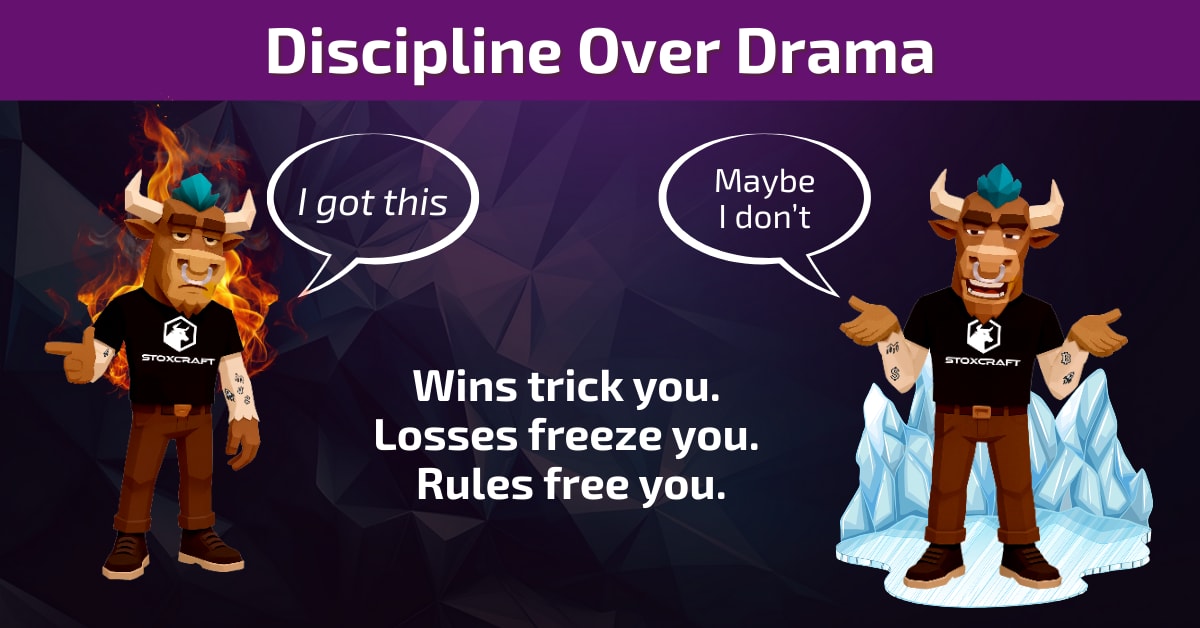
After that, Toroshi backed off.
He scrolled through new ideas but couldn’t pull the trigger.
Every setup looked like a trap. Every dip felt like danger.
He’d open a chart, then close it again. Better to wait, he told himself. Just until I feel more sure.
But the feeling never came. He wasn’t playing smart. He was playing scared.
One morning, he watched a stock he’d been tracking for weeks break out.
And he wasn’t in it. That stung more than the biotech loss.
Not because he missed the gains. But because he realized regret was now steering his trades.
That’s when he changed the rule.
No more confidence trades. No more emotional silence.
Now, every idea runs through the same checklist.
Same risk review. Same size. Same cooldown.
Doesn’t matter if he’s winning or recovering.It’s not about killing emotion.
It’s about keeping it from driving the bus.
That’s how a strategy protects you when emotions swing.
You’ve seen how ego and regret distort your timing.
Now check if you can spot those moments under pressure.
Next, we tackle the hardest skill in investing: doing nothing.
