Quick Start
Why following the herd leads to regret


Bearry was just scrolling.
TikTok. YouTube. Instagram. Every feed had the same stock: Nexify. Supposedly the “next big thing” in AI. One creator called it his number one stock for the year. Another said, “This one’s about to moon.” Even finance YouTubers were suddenly calling it “undervalued.”
He’d never heard of it before. But now it was everywhere.
He felt that itch. The price was already up, but the comments sealed the deal:
“Just bought 200 shares ”
“Holding strong. This one’s going to explode.”
“Don’t miss it. You’ll regret it.”
So he bought in. No plan. No research. Just vibes.
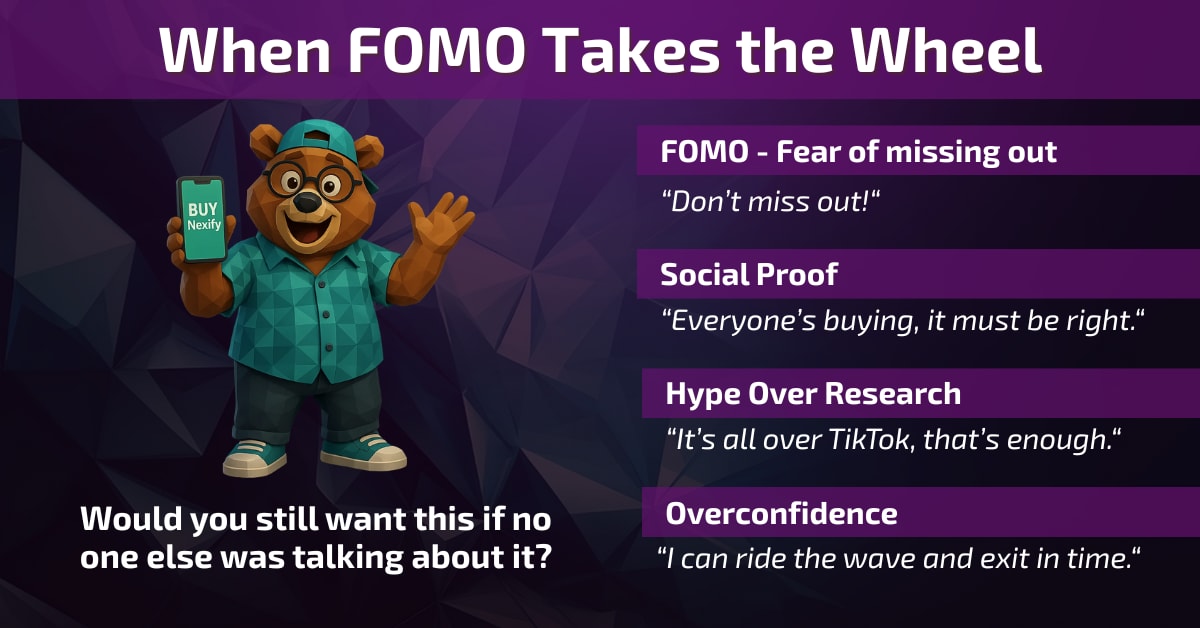
For a few days, everything looked fine. The hype kept rolling. People kept posting. But then, the momentum died. The price dipped. Then dipped more.
No bad news, just silence. The comments shifted:
“Down 17%. I’m out.”
“Should’ve known this was a pump.”
Screenshots of losses started popping up.
Bearry panicked. He hit sell before he could even think. Locked in a double-digit loss.
The next day, the price rebounded. Two weeks later, it was back above his entry point.
Bearry didn’t just lose money. He lost control.
FOMO made it feel smart. Social proof made it feel safe. Panic made it feel urgent.
Now he asks one question before buying anything:
“Would I still want this if no one else was talking about it?”
That one filter changes everything.
You’ve seen how hype pulls you into bad timing.
Now test if you can spot those moments early.
Next, we tackle loss aversion. Why red numbers feel unbearable and how that pain leads to panic moves and early exits.
