Quick Start
Why following the herd leads to regret


Imagine you're watching a rocket launch. Not in real life, but on a stock chart. Everyone’s cheering.
Memes are flying. Headlines scream “Don’t miss this!” And even if you swore you wouldn’t chase hype again, your fingers are already hovering over the buy button.
That’s the herd pulling you in.
Your brain evolved to stay with the group. It helped you survive, avoid danger, and feel safe.
But in the markets, those instincts flip. They make you chase bubbles, panic at the worst time, and confuse noise with insight.
Let’s unpack how social triggers override your thinking and how to stay sharp.
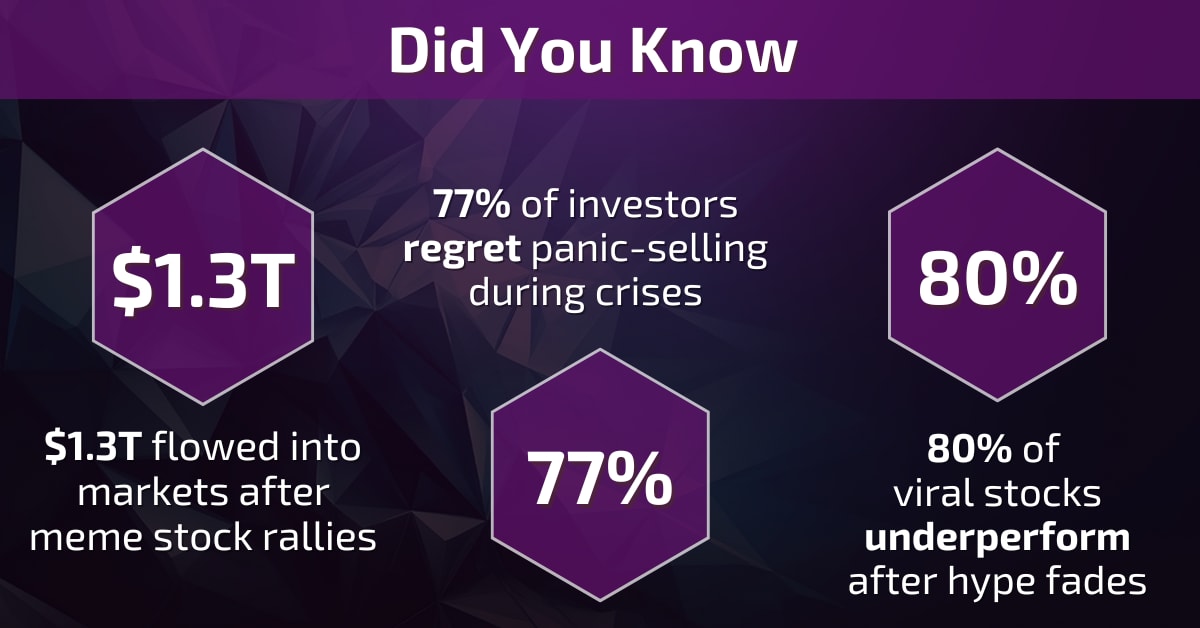
FOMO doesn’t shout. It whispers, “Everyone else is making money. Why not you?”
Suddenly, risky trades feel responsible. You tell yourself it’s research, but it’s mostly emotion in disguise.
You scroll past a tweet. Someone made $2,000 on a meme coin you’ve never heard of. You don’t even like crypto. But for some reason, it’s now on your radar, and your next click is the buy button.
Counter move: Set a 24-hour rule before jumping into hype. If it still makes sense tomorrow, act.
When a stock trends online, it creates momentum. Not because of facts, but because everyone is watching. The more noise, the more legit it feels.
You open Reddit. One stock dominates the front page. You’ve never looked at it before, but suddenly it feels urgent. Everyone’s in, so it must be a smart move… until you realize you just bought the top.
Counter move: Stick to your pre-built watchlist. Don’t let noise rewrite your playbook mid-game.
Markets drop. Fear spreads. You open your app and see your portfolio down 8%. No headlines yet, just red. Your chest tightens. You sell to “protect what’s left,” then watch the bounce two hours later.
That’s not insight. It’s adrenaline. Panic selling triggered by volatility.
Counter move: Let rules make the call. Use stop-losses or rebalancing triggers set when you're calm, not emotional.
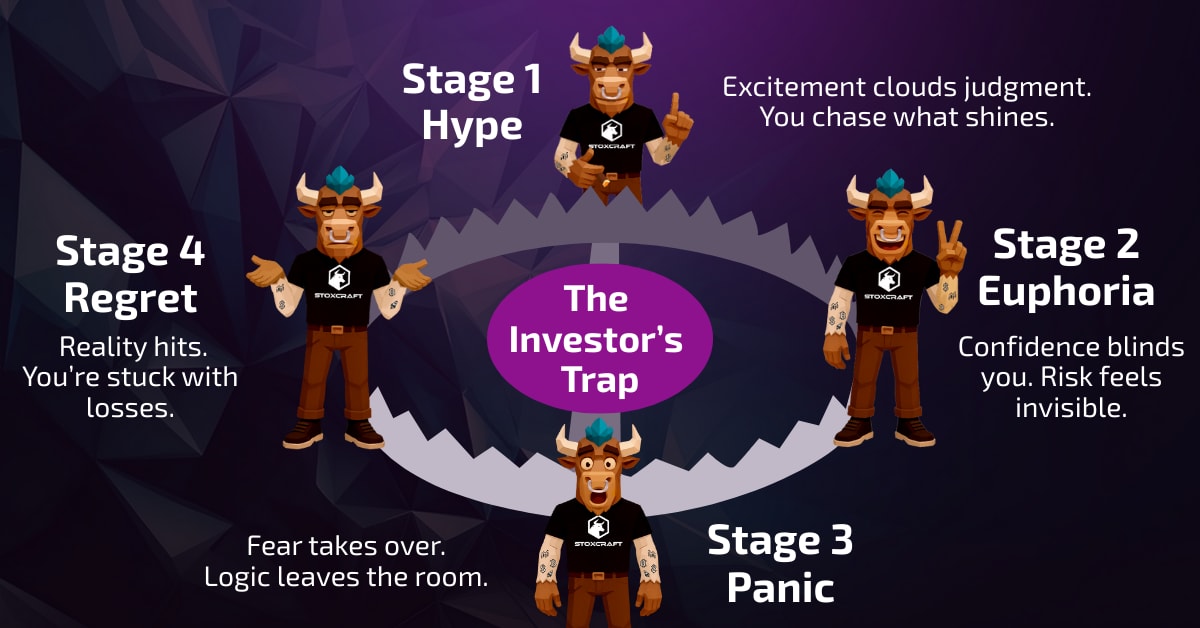
Hype, euphoria, crash, regret. Same story, different stock.
And yet it works every time because we keep falling for it.
You think back. Every time you chased a viral play, the pattern repeated. The hype felt smart, the dip felt shocking.
Until you zoom out and see the rhythm of the news cycle.
Counter move: Track sentiment, not just charts. If everyone’s overly confident, the exit may be closer than it looks.
Core takeaways:
You can’t turn off your instincts. But you can train yourself to see the trap before you’re in it. FOMO, panic and herd logic all thrive on urgency. But once you pause, even briefly, you get to choose your next move.
Let’s see what that looks like in a real scenario.
