Quick Start
Why we lie to ourselves in investing


You skip the gym. But you tell yourself you’ll go tomorrow.
You’re playing SIMS. Forget to build a pool ladder. Your Sim drowns. Clearly, the game is just stupid.
You make a bad trade. But the market was irrational, not you.
That’s cognitive dissonance at work. The mental discomfort when reality doesn’t match your self-image.Instead of changing our behavior, we change the story.
We bend the logic just enough to protect how we see ourselves: smart, in control, competent.
But that short-term relief comes at a long-term cost.
This skill breaks down how this bias plays out in everyday decisions and how it silently wrecks your investing without you even noticing.
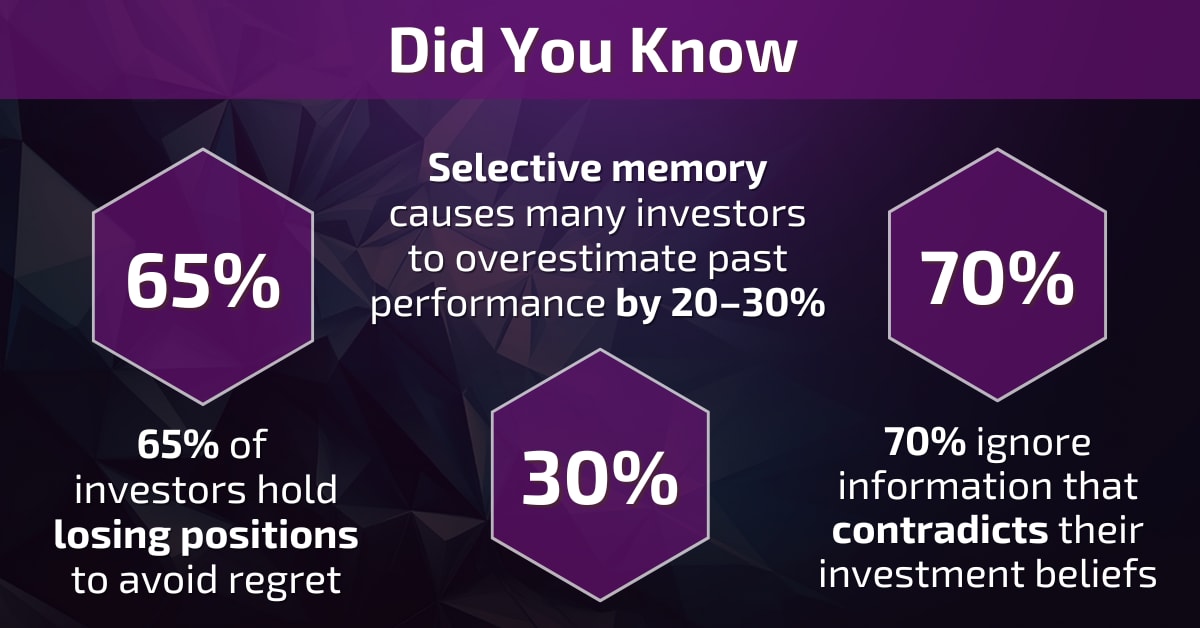
Nobody likes being wrong. So when the outcome doesn’t match the plan, we rewrite the plan.
You didn’t panic-sell. You just “secured gains.”
You didn’t hold a loser. You just “believe in the long-term.”
These aren’t always lies. But they often mask regret.
And once you rewrite the story, you stop learning. You protect your ego instead of your capital.
A bad trade feels personal. So we treat it like a reputation issue, not a data point.
That’s why traders average down instead of cutting.They don’t want to be the person who lost. They want to be the one who turned it around.
But averaging down without logic is not strategy. It’s ego preservation in disguise.
The market doesn’t care about your pride. Only you do.
The brain loves shortcuts. When something goes wrong, it rushes to explain it.
The faster that story forms, the less likely it is to be accurate.
And the more we repeat it, the more we believe it.
The fix is not to stop feeling discomfort. It’s to pause before you patch it with a fake narrative.
The truth might sting, but it builds strength.
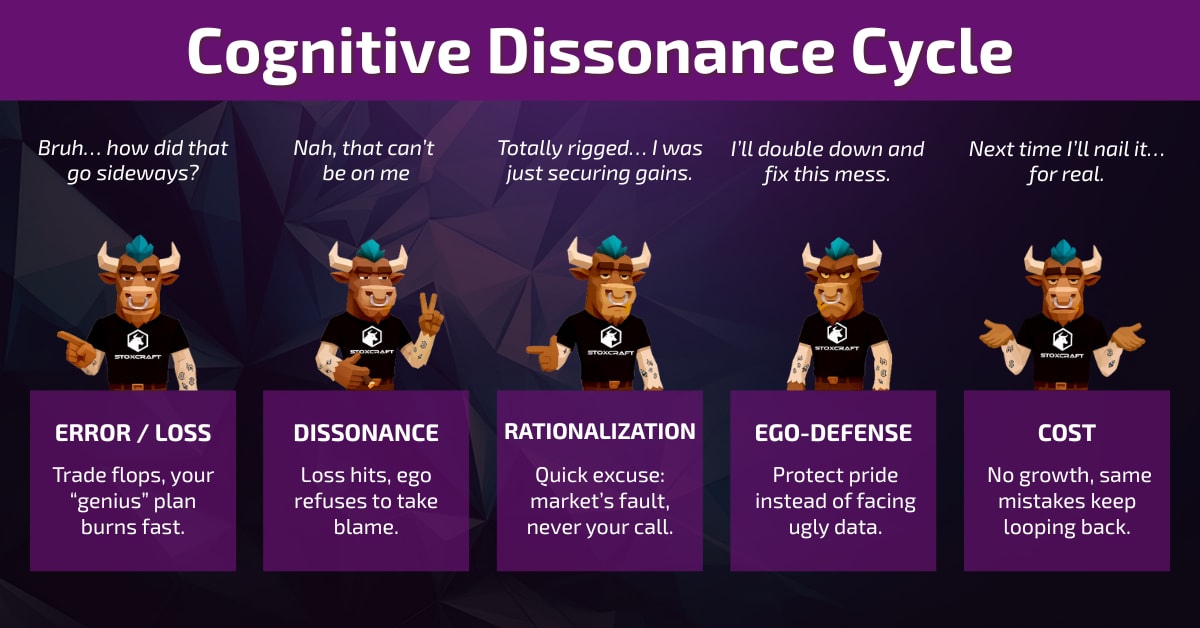
If you want to improve your decision-making, you have to own your misses.
That means writing down your trades. Reviewing your logic.
Not just the outcome, but the why behind it.
Build a post-trade checklist. Set rules for when to cut and when to hold. Do it before emotion shows up. Self-honesty is not optional. It’s the foundation of every strong investing system.
We all twist the story sometimes. It’s human. But the longer you let it run, the further you drift from clarity. Cognitive dissonance won’t disappear. But you can train yourself to notice it, interrupt it and respond with better tools. Investing well starts by being honest with the only person who can change your outcome: you.
Core takeaways:
Now let’s see what happens when that bias hits mid-trade and the voice in your head starts rewriting reality in real time.
