Quick Start
Explore how early investing multiplies your results


Everyone wants the same outcome.
More freedom. Less stress. A portfolio that works for you by age 50. But the path? That’s where it splits.
Let’s follow three investors. They all stay consistent. They all invest in the same global ETF. The only difference is when they begin.
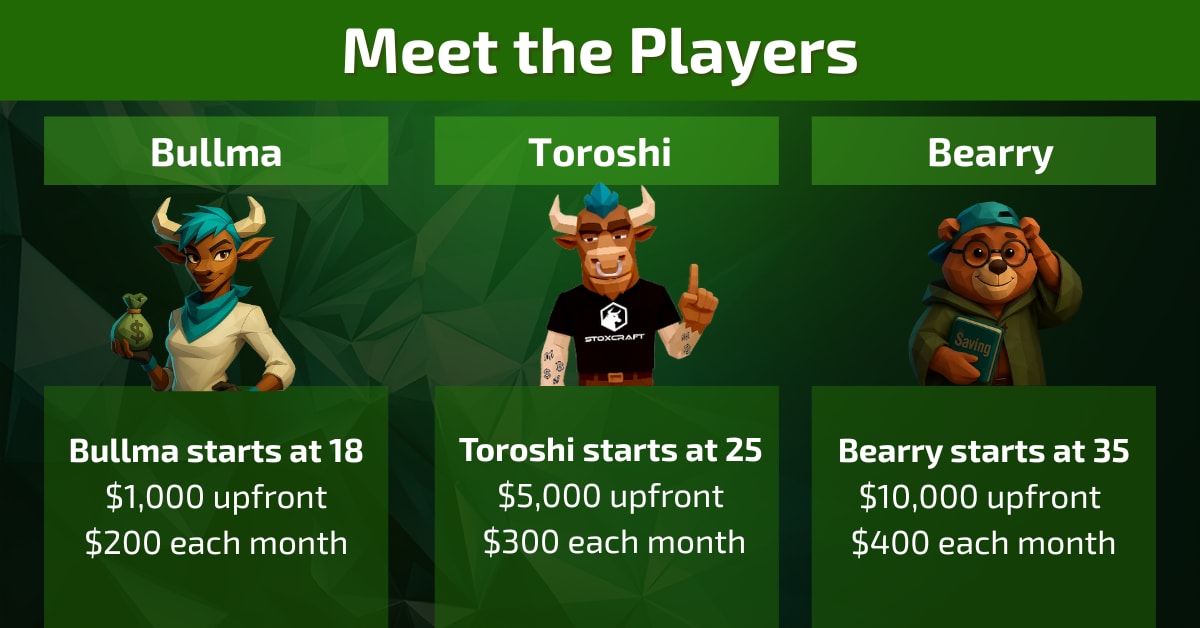
They all invest in a broad global equity ETF like Vanguard FTSE All-World (VWCE). It holds over 3,000 stocks from around the world.
Diversified. Low fees. Long-term focused. Historically, it returned about 7% per year after inflation.
No wild bets. No day trading. Just steady investing into a proven vehicle.
Bullma starts with the least. For years, her portfolio crawls. But compounding doesn’t care about pace. It cares about time. By her late thirties, her early discipline starts to explode.
Toroshi adds more each month. He gets solid growth. But starting seven years later means he misses the early snowball.
Bearry invests the most. He even boosts his monthly contributions. But time is short. His money grows, but it never builds the same momentum.
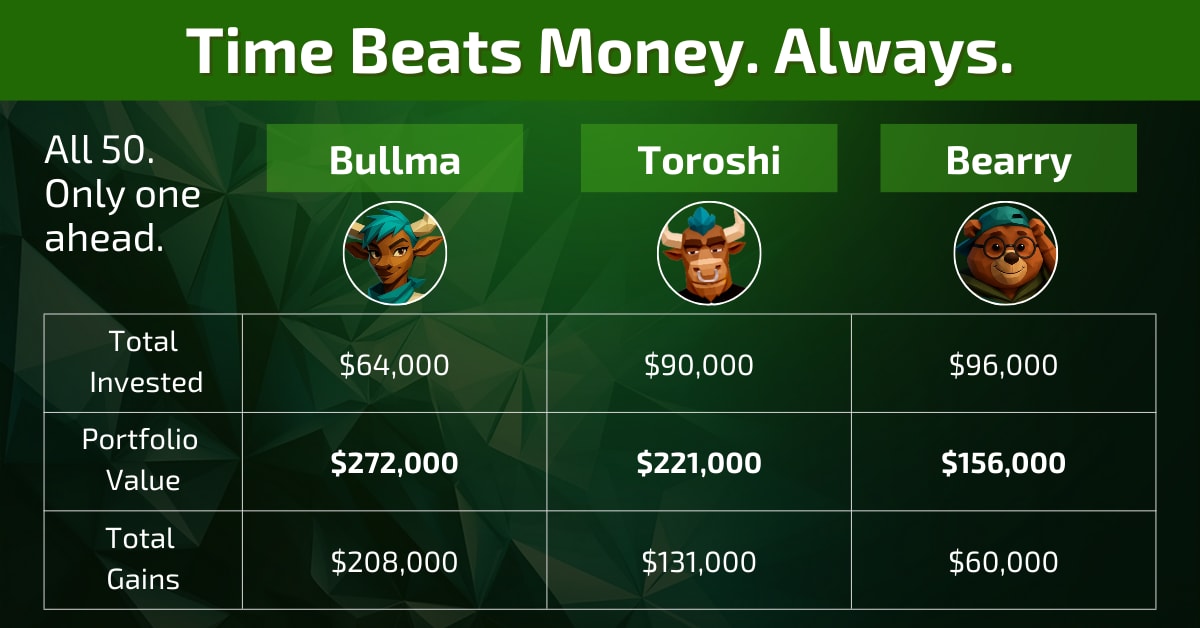
While all three end up with solid portfolios, the differences speak volumes. Bullma, who started at 18 with lower monthly contributions, ends up far ahead. Not because she invested the most, but because she gave his money time to grow.
Toroshi started later but contributed more each month. He made progress, but couldn’t catch up. Bearry, who began at 35, invested the most per month, but even that wasn’t enough to close the gap created by a late start.
The pattern is clear. Time beats size. Early momentum compounds into long-term strength, and no amount of money can fully make up for lost years.
You’ve seen why time matters. Test your understanding in the quiz, then learn how clear financial goals turn time into an actual plan.
