Quick Start
How bonds work and support portfolios


Toroshi loves chasing growth.
His portfolio is stacked with tech stocks and high flyers because that is where the action is.
Bullma prefers balance. She splits her money between stocks and bonds.
To Toroshi, it feels boring. Why settle for slow interest payments when stocks can double?
For a while, he is ahead, bragging about big winners while Bullma’s portfolio moves more steadily.
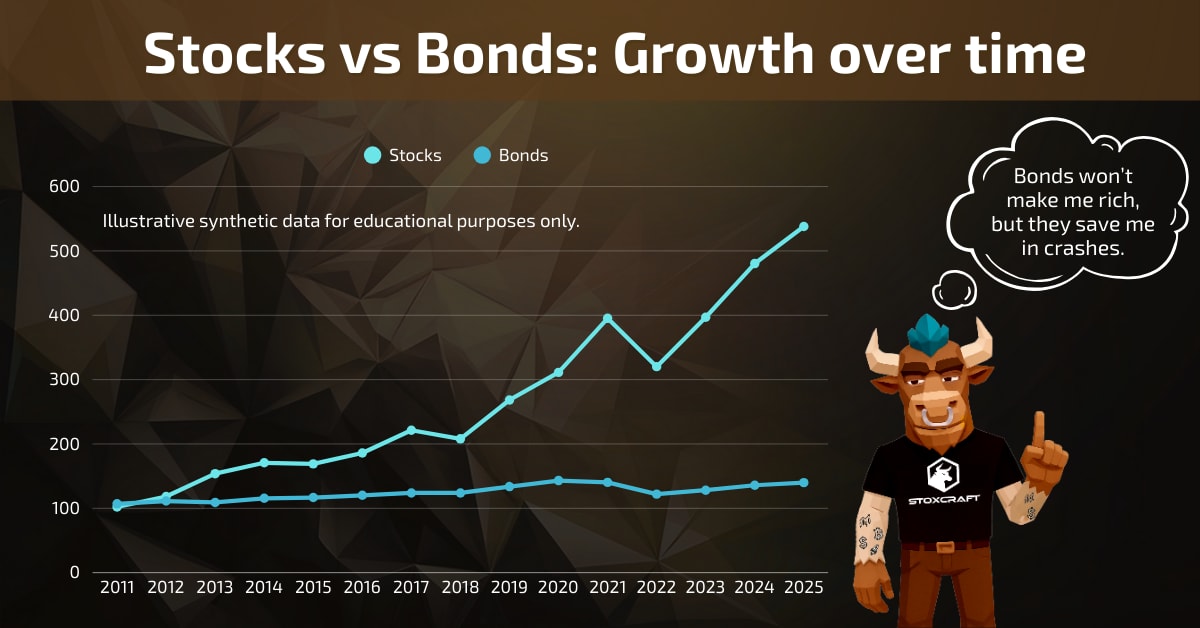
When the market corrects, Toroshi’s portfolio tumbles.
He watches losses build day after day and feels tempted to sell at the bottom.
Bullma also sees her stocks fall, but her bonds cushion the blow.
The steady interest payments keep coming, and bond prices even rise as investors rush to safe havens during a market crash.
What looked boring before suddenly shows its value.
Bonds act like a shield when everything else is in free fall, reducing overall volatility.
This is exactly why bonds matter for managing risk without losing sleep.
Bonds act like a shield when everything else is in free fall.
As the market recovers, stocks bounce hard.
Toroshi’s portfolio regains ground while Bullma’s bonds continue their slow and steady climb.
It becomes clear that bonds alone will not create wealth over decades.
They are designed to protect, not to multiply.
Long-term charts show the difference: stocks deliver stronger growth, bonds provide stability.
The power is not in choosing one side, but in combining them.
Together they create portfolios that can handle both rallies and crashes.
Take the quiz to test your balance instincts, then continue with real estate to explore how property fits into a diversified portfolio without the hassle.
