Quick Start
How property fits a balanced portfolio


Bullma invests mostly in quality stocks.
A smaller slice sits in REITs so rent cash shows up as dividends.
She is not chasing yield. She wants paydays that arrive on schedule.
Each payout flows into a small cash bucket. Her watchlist has clear add zones.
If a favorite drops without breaking the thesis, she buys a small slice using dividend cash only.
No guessing. No selling winners to fund entries.
When a rough month hits and prices slide, the plan moves first.
Dividends from apartments, warehouses, and towers refill the bucket.
Bullma buys the dip in two names and spreads the rest across her list.
She is not calling a bottom. She is lowering her average cost with money created by tenants.
Quarter by quarter the routine repeats. Payouts land. The bucket refills.
Red days become planned entries instead of stress.
If the market stays calm, she waits.
If one stock drops 10 to 20% but the story holds, she adds.
If the whole market wobbles, she spreads buys across several positions.
The rule is simple. Dividends fund the adds. Size stays small. Thesis first.
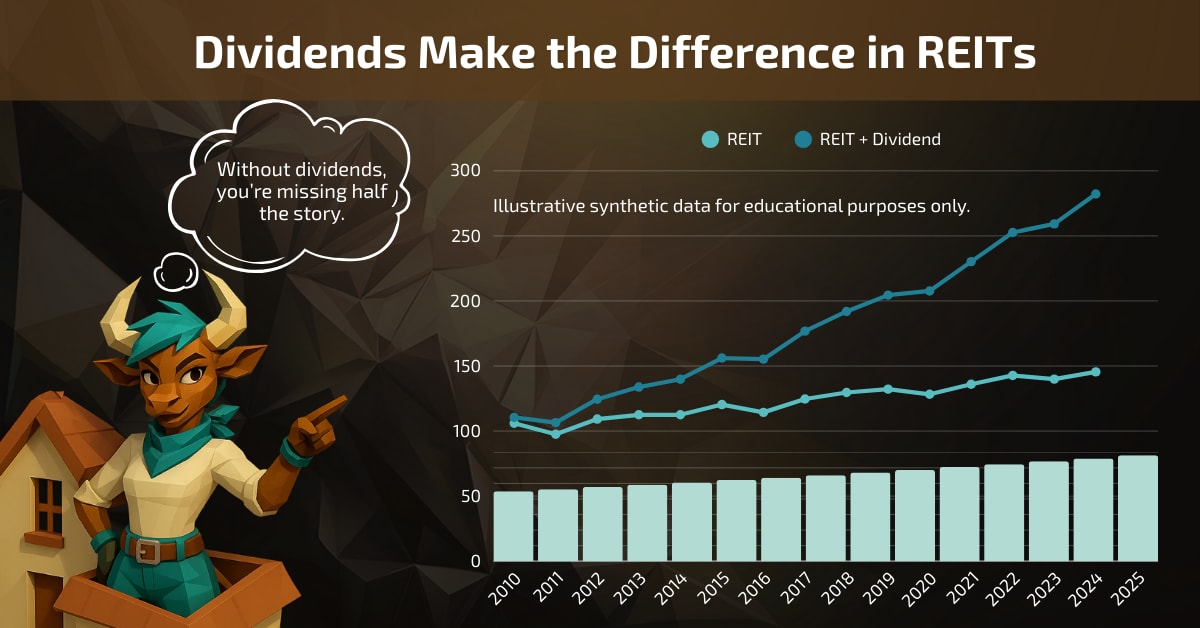
REITs provide income and discipline. Stocks still drive long-term growth. The mix matters.
The income sleeve supports behavior. The core holdings compound.
Bullma keeps real estate as a supporting role.
Enough to power steady adds. Not so much that it dominates returns.
Lock in the logic with the quiz. Next up, you’ll learn how dividends, splits, and dilution quietly change your portfolio without any price move.
