The Stoxcraft Academy in 60 seconds
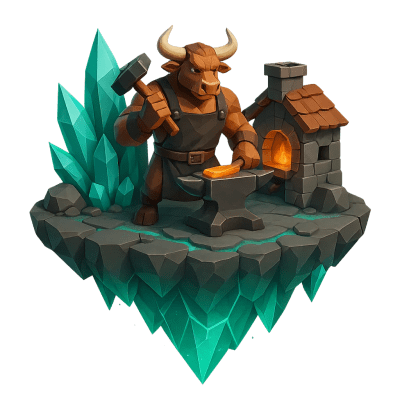
The Stoxcraft Academy is Stoxcraft's built-in learning system: themed islands with 10 skills each, structured closer to a game map than a finance course you'd sit through in a classroom.
There's also a shorter video where Toroshi, the Academy's mascot, walks you through the key points if you'd rather watch than read through all of this yourself.
Instead of one long course you sit through start to finish, you explore islands. Each one covers a theme, from investing fundamentals to strategy, psychology, technical analysis and even crypto and blockchain. Skills unlock as you go, and every single skill follows the same rhythm: a quick overview, a deeper explanation, a real example with actual numbers, and a quiz that locks in what you just learned before you move on.
You don't move through it in a straight line either, and nobody's forcing you to finish everything in order. Pick an island that matches what you're actually curious about right now, finish a skill in a few minutes between other things, and come back for the next one whenever you feel like it.
Finish an island and you unlock a Performance Booster Pack as the reward for actually following through. That's the whole idea behind the structure: learning that feels like progress you can see, not homework you're dreading.
Why the Academy feels like a game map, not a course
The Stoxcraft Academy is the structured learning system behind Stoxcraft, built around themed islands of 10 skills each instead of one long course.
Why the Academy uses islands instead of chapters
Most finance courses are built the same way: chapter one, chapter two, chapter three, in a straight line whether you need it or not. The Stoxcraft Academy skips that. Each island is a self-contained theme with 10 skills of its own, Investment Basics, Investment Psychology, The Strategy Codex, and so on, and you choose which one to explore next.
That's not just a cosmetic choice. Real investors don't learn in a straight line either. You get curious about risk after a bad week, or about psychology after making an emotional trade, and the Academy is built to let you follow that curiosity instead of forcing you through a fixed syllabus. Research on self-directed learning backs this up: learners who have real control over their own educational path show measurably better retention than those who don't, regardless of subject.
Why this feels like a skill tree, not a curriculum
If you've ever put points into a skill tree in an MMO, or unlocked a new ability branch in an RPG, you already understand the logic here better than any finance textbook could teach you. You don't max out every branch on day one. You pick the skills that match the build you're going for, and you come back for the rest later.
The Stoxcraft Academy works the same way. Nobody expects you to finish every skill on every island before you're allowed to have an opinion on a stock. Someone building toward long-term, buy-and-hold investing gets more out of The Strategy Codex early. Someone who keeps getting burned by emotional decisions gets more out of Investment Psychology first. The skills you pick first shape your build, the same way a tank build and a glass cannon build both clear the same game with completely different skill points.
That's also why finishing an island unlocks a Performance Booster Pack instead of just a checkmark. In an MMO, a skill point only matters once you actually use it, in a fight, on a boss, somewhere real. A finished island works the same way: the reward is a themed set of stock picks built specifically to let you use what you just unlocked on an actual Apple card or whatever you pick next, not a badge that sits unused in a menu.
How a Stoxcraft skill actually teaches you something
Every single skill follows the same four-part rhythm, all 10 on any given island, so learning never feels unfamiliar twice. A quick overview gets you the core idea in a couple of minutes, short enough to fit into a coffee break. A deeper explanation connects the idea to the mechanics behind it, the kind of thing a professional investor already knows without thinking about it. A real example shows the idea applied to an actual company or market event, not a hypothetical. And a short quiz locks it in before you move on to the next one.
None of these four parts exist to pad out the page. Skip the quiz and the idea stays theoretical. Skip the real example and it stays abstract. Structured game elements measurably raise learner engagement across skill, emotional and participation dimensions compared to ungamified instruction, and that four-part loop is Stoxcraft's version of it: a five-minute read that turns into something you'd actually recognize the next time you see it on a real stock.
The order the Academy's islands are built to follow
The islands aren't randomly ordered, even though you can jump around freely. The first cluster covers the fundamentals: why markets exist, what different products actually are, and how your own mindset shapes decisions before you've even opened a position. Stoxcraft Introduction sits at the very start for exactly that reason.
The middle cluster shifts from understanding to application. Fundamental Analysis and Technical Analysis teach you how to evaluate a company instead of guessing, and those ideas plug directly into the Stoxcraft Screener so you're practicing with real data, not flashcards. The final cluster adds the layer most courses skip entirely: how to read news and hype without overreacting, where AI fits as a tool, and how newer areas like crypto connect to everything you learned before.
What you get for finishing an island
Finish all the skills on an island and you unlock a Performance Booster Pack from the Stoxcraft store, a themed set of stock picks tied to what you just learned. It's less about the reward itself and more about closing the loop: you learned the idea, and now you get a concrete starting point to apply it to.
The last island, The Final Quest, isn't really about new concepts at all. It's where everything gets tested at once, using real cases: analyzing Apple step by step, comparing Tesla against Coca-Cola, separating GameStop hype from NVIDIA substance. By the time you get there, the goal isn't learning something new. It's proving you can actually use what you already know.
You're not locked into any of this either. Free accounts get real access to the Academy, not a stripped-down preview, so you can test whether the format actually works for you before committing to anything. There's also a layer beyond the islands themselves: the wider Stoxcraft community. Skills teach you the mechanics, but they can't show you every blind spot in your own thinking. Other investors, working through the same islands and hitting different walls, tend to catch the patterns you miss on your own. That's why the Academy nudges you toward shared insights instead of treating Investment Psychology as something you figure out completely alone. No build clears every fight solo, in a game or in a portfolio.
Start your first Stoxcraft Academy skill today
Ready to start? Pick one island, not all of them at once. The whole system is designed so you can go deep on one theme before touching the rest, and jumping between all of them on day one gets you nowhere on any of them, no matter how curious you feel right now.
Not ready to commit to a specific island yet, and still want to get a feel for the whole system first? Poke around the demo portfolio first, no signup required to take a look. It's free, pre-loaded with real stocks, and shows you exactly what the scores look like in practice before you decide where to start learning. Five minutes there is usually enough to know if the format clicks for you, no pressure to pick an island before you've even seen what the scores look like on a real company.
1. Pick your first island. Open the Academy map on your dashboard and see which island actually catches your eye first, before you read anyone else's opinion on where you should begin. Start with Stoxcraft Introduction if you haven't already, then move to whichever island actually matches what you're curious about right now.
2. Finish one full skill. Go through all four parts, the overview, the deep dive, the example and the quiz, before jumping to the next one. That loop is what makes it stick instead of sliding out of your head by tomorrow.
3. Cash in your Booster Pack. Finish the island and open your Performance Booster Pack. It's a real starting point for your next research session, not just a badge to look at.
Ready to see how well this stuck? Test what you just learned.
Skill Check
Test what you just learned
A couple of quick questions to lock in what you covered here, then straight on to the next skill.
1 of 3
questions
What is the purpose of the Quick Start section?