Quick Start
How gaming logic makes stock data easy to understand


The idea behind Stoxcards started with a simple question: why does finance feel so unnatural? Games like Pokémon or Magic taught us to read stats, compare builds, and form strategies instinctively.
We wanted that same feeling when looking at stocks. Every Stoxcard channels that logic. It turns raw financial data into something visual, familiar, and instantly meaningful. Numbers start to feel like character stats instead of spreadsheet chaos.
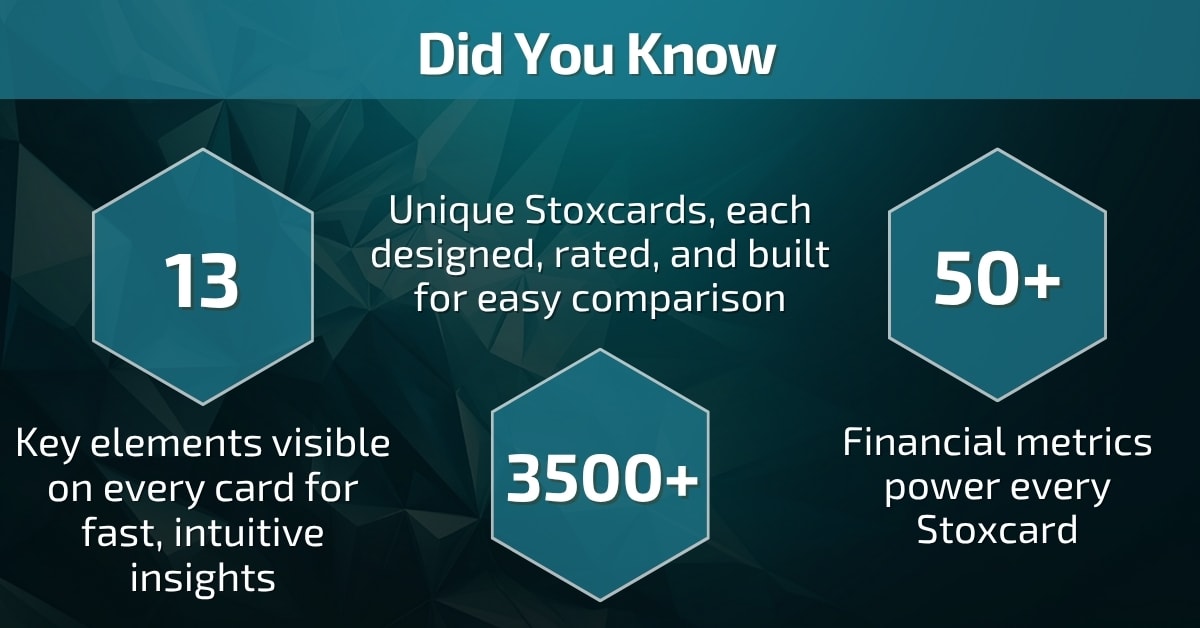
Each card is more than a cool graphic. Behind every element lie over 50 financial metrics that are processed, weighted, and visualized for clarity. The goal is not to hide data but to show it in a way your instincts can process.
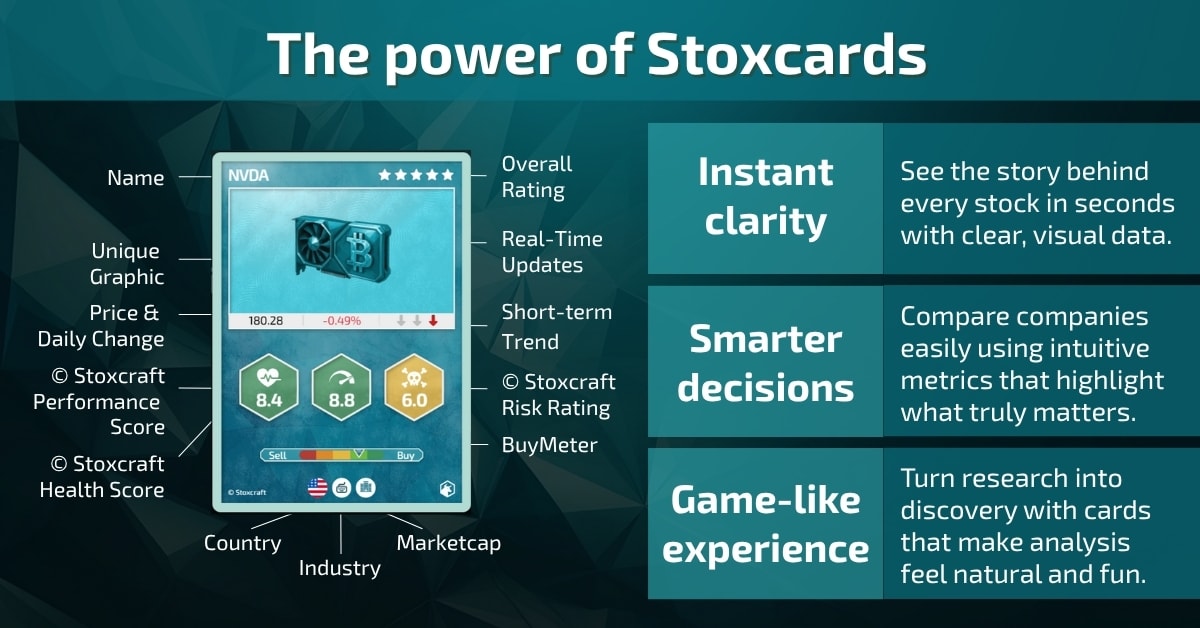
Health, Performance, and Risk act as the core stats, just like strength, defense, or agility in a deck. It’s not about oversimplifying markets but about presenting them in a way your brain already understands.
Visual design doesn’t mean less data. It means better focus. Every number on a Stoxcard connects to real fundamentals. Health reflects profitability, liquidity, and solvency. Performance captures consistency across multiple timeframes. Risk measures volatility and drawdowns.
Together, they create a first impression that’s quick but credible. The deeper layers remain accessible for anyone who wants to explore further.
The more time you spend with your portfolio, the more you recognize patterns.
That’s the power of familiarity.
When you start spotting strong cards, finding weak ones, or discovering hidden gems, you are not just analyzing data. You are building a connection.
The cards make portfolio research visual, engaging, and even fun. They invite curiosity and make exploring new companies feel like a main quest, not a side mission you keep skipping.
Stoxcards aren’t meant to replace research. They’re designed to make it approachable. Once you start seeing data as something visual and intuitive, finance stops feeling distant. You begin to think, compare, and decide like an investor, naturally.
Core Takeaways:
The next step shows how this feels in action. In the following Use Case, you’ll see how to use Stoxcards to explore, compare, and build portfolios with the same thrill you once had collecting your favorite Pokémon cards.
