Quick Start
Learn how to handle market swings


Volatility doesn’t just hit your portfolio. It messes with your head.
You start with a plan. But the second prices drop fast, your brain flips into search mode.
You check your app. You skim headlines. You look for patterns. It feels like you’re being smart.
But that’s not clarity. That’s noise.
It sneaks in through tabs, alerts and notifications, and pulls you out of strategy and into reaction.

Fast market moves feel like an emergency.
Even when nothing has changed fundamentally.
Your brain wants explanations.
So it chases news, charts and rumors.
But most volatility isn’t driven by facts you can act on. It’s randomness in motion
The more you watch it, the more emotional it gets.
That emotional overload makes small drops feel big and normal swings feel like warnings.
Checking your portfolio too often doesn’t reduce risk. It increases stress.
Every dip looks sharper when you see it in real time. You start connecting dots that aren’t there.
You tweak your plan. You doubt your setup.
Studies show that investors who check performance multiple times a day trade more impulsively and earn less. Not because they lack knowledge. Because they lose perspective
That’s how panic selling sneaks in. Quietly.
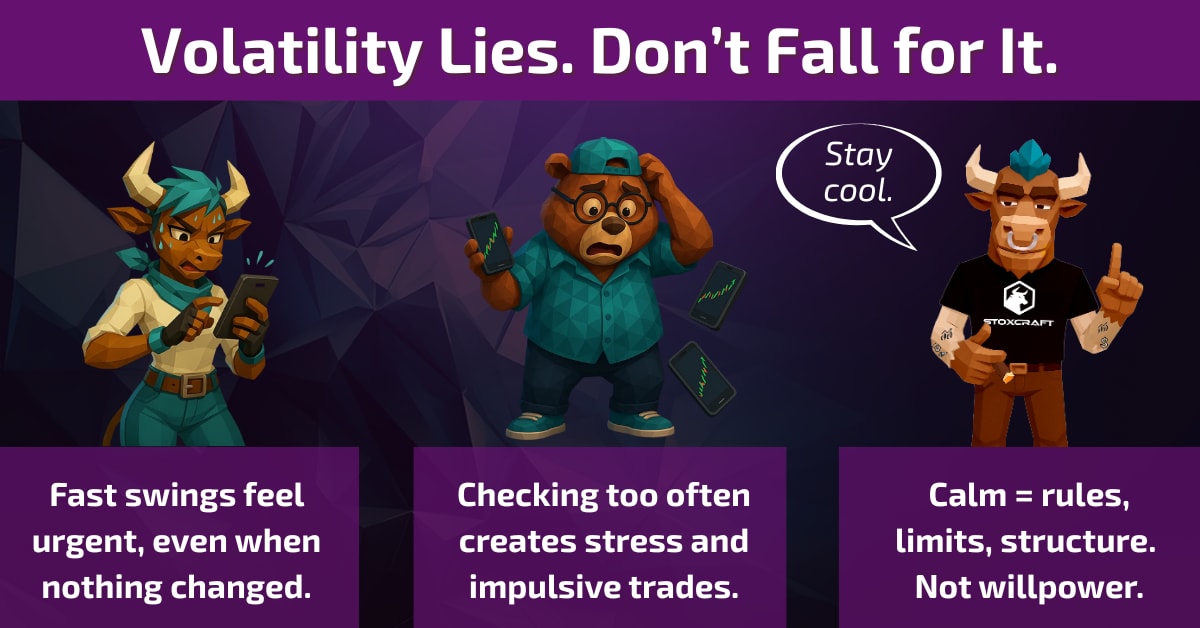
You can’t stay calm just by trying harder. You need structure.
That means having a plan for what to do when markets swing.
Rules for rebalancing. Limits on how often you check.
Triggers for adjusting only under clear conditions.
Calm isn’t about being stoic. It’s about knowing the difference between a real signal and mental static.
Volatility reveals how easily your thinking gets pulled off course
But once you see the patterns, you can train your focus to ignore the noise.
You don’t need to predict the market. You need a system that works without constant tweaking.
Core takeaways:
Let’s look at what happens when the feed goes wild, your screen lights up red and staying calm feels harder than ever.
