Quick Start
From hype-driven to system-driven investing


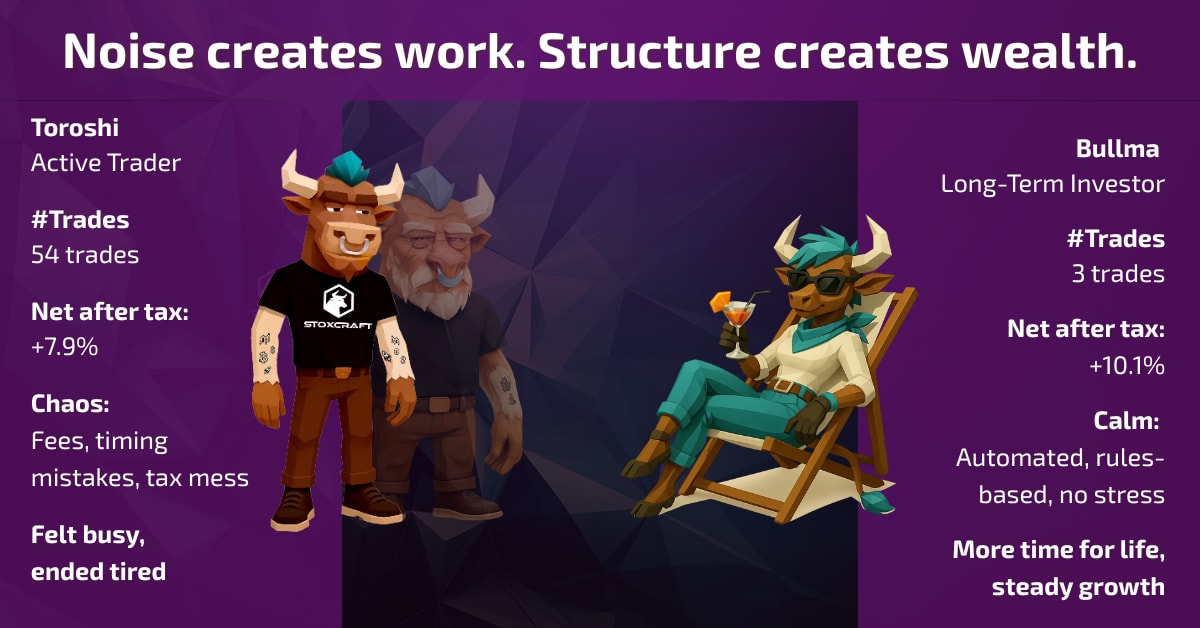
Toroshi and Bullma both start the year with $10,000 and a goal to grow their money.
But they approach the game very differently.
Toroshi trades actively. He reads signals, follows news, hunts momentum and times entries.
Bullma builds a long-term system. She automates buys, sets thresholds and tunes out the noise.
This is how their year unfolds. Same market. Same goal. Two completely different outcomes.
Toroshi kicks off the year with energy. He sets alerts, builds a watchlist and joins a new Discord group. In Q1 alone, he makes 19 trades. Some winners. Some losses.
He wakes up early, watches pre-market moves and jumps into trending AI stocks. It feels like progress.
Bullma sets up a recurring monthly buy into her ETF portfolio. No alerts. No adjustments.
In March, she goes hiking.
Markets wobble. Inflation headlines spike.
Toroshi exits a position two days too early, then jumps back in at a worse price.
He tries a hedge. Then reverses it.
By July, he is up 11% gross. But fees and spreads have already chipped away.
He feels in control, but his energy is fading.
Bullma checks her portfolio once. She is up 9.3%.
Her only action is a small rebalance in June, triggered by her 5% threshold.
While Toroshi rewatches chart breakdowns, Bullma reads sci-fi on a beach in Portugal.
News breaks. A big Fed meeting is coming. Volatility spikes.
Toroshi panic-sells his best performer after a 6% drop. It bounces back the next day.
Frustrated, he doubles down on a rebound pick that turns into dead weight.
That trade alone erases two months of gains.
Bullma sees the same news and gets a coffee. Her strategy does not change just because headlines do. She adds a little to her ETF in October. Then logs out.
Toroshi’s final portfolio: 13.2% gross return.
After fees, missed timing and short-term tax hits, net: 7.9% .His tax folder is chaos. 54 trades.
Dozens of taxable events. Manual corrections needed. He spends a weekend untangling the paperwork.
Bullma’s return: 10.7% gross. Net after tax: 10.1% . No surprises. No stress.
Her total trades for the year: 3. Total time spent on investing: under 2 hours.
Toroshi worked harder. Bullma built smarter.
She did not beat the market with luck.
She stayed aligned with it through structure and clarity.
Before you move on, test if you can spot real progress versus busy action.
Next up: Cognitive dissonance in investing. Learn why your brain protects bad decisions and how to catch it in the act.
