Quick Start
Create your own investing playbook for success


Bullma starts every Monday with the same ritual. Coffee, screen on, checklist out.
The market can throw anything at her, but her playbook keeps her sharp.
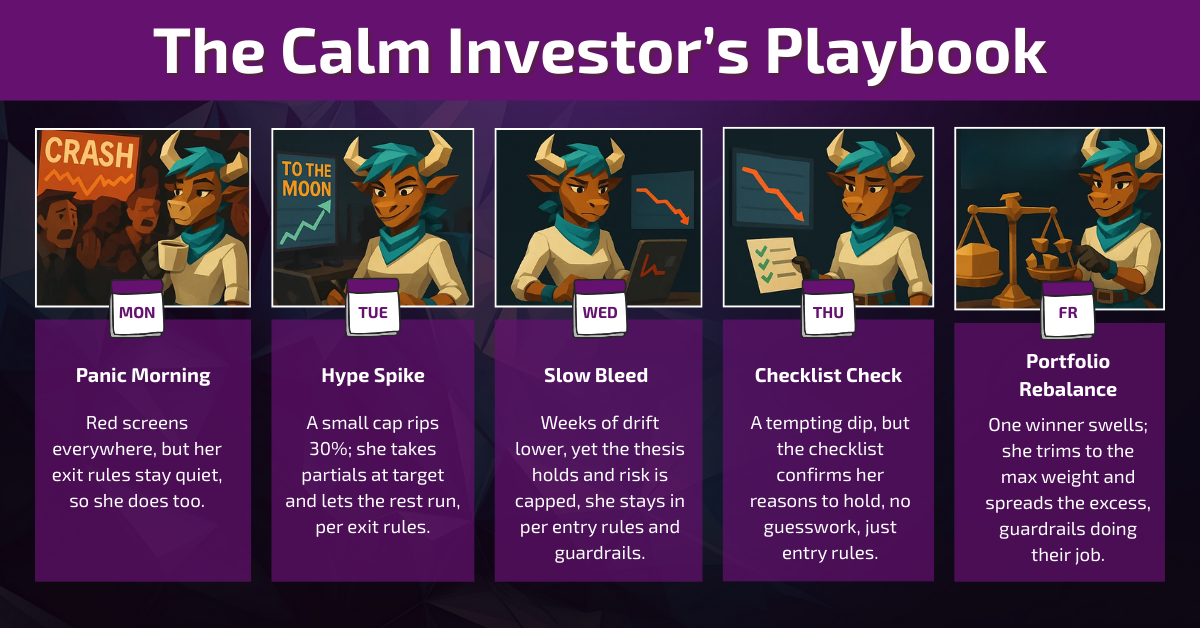
Bullma wakes up to deep red futures and headlines screaming “Crash.”
Most traders rush to sell, but he calmly checks her exit rules. None are triggered. Positions stay untouched. By the end of the day, prices have already started to recover.
One of her smaller stocks jumps 30% in a single session. Social feeds scream “To the moon.”
Bullma checks her targets and position size rules. She takes partial profits, locks in gains and leaves the rest to run.
A steady loser in her portfolio has been sliding for weeks.
Her gut wants out, but the fundamentals still check out. Risk is within limits.
The position stays, and the slow bleed eventually stops.
End-of-month review comes early this week.
One position has grown to 25% of the portfolio. Her guardrails allow 20%.
She trims it back and rebalances into other sectors, keeping risk in line.
A major holding reports earnings today. Her checklist reminds her: no new buys before results, partial profits on oversized winners. She follows through, watching others panic-buy or dump shares on impulse.
By the weekend, Bullma has navigated five very different market situations without a single rash move. Her checklist didn’t predict the week’s events, but it made sure she was prepared for all of them. The real win was not reacting to noise but sticking to the system she built when the market was calm.
When the next curveball hits, choose the rule over the rush and see how different your decision looks.
You’ve built the mindset. Now it’s time to understand the tools.
Next up: Financial Products and Markets. Learn how assets work, how markets move, and what really happens when you place a trade.
