Quick Start
Why staying invested beats guessing the perfect moment.


Picture this. You’re standing in front of a machine that randomly spits out rewards. Everyone around you claims to know when to press the button. Some guess right, most don’t. You try to keep up, but it feels like luck, not strategy.
That’s what timing the market looks like for most people. A guessing game dressed up as smart investing. But here’s the truth. The market doesn’t reward perfect moves. It rewards patience, consistency and time in the game.
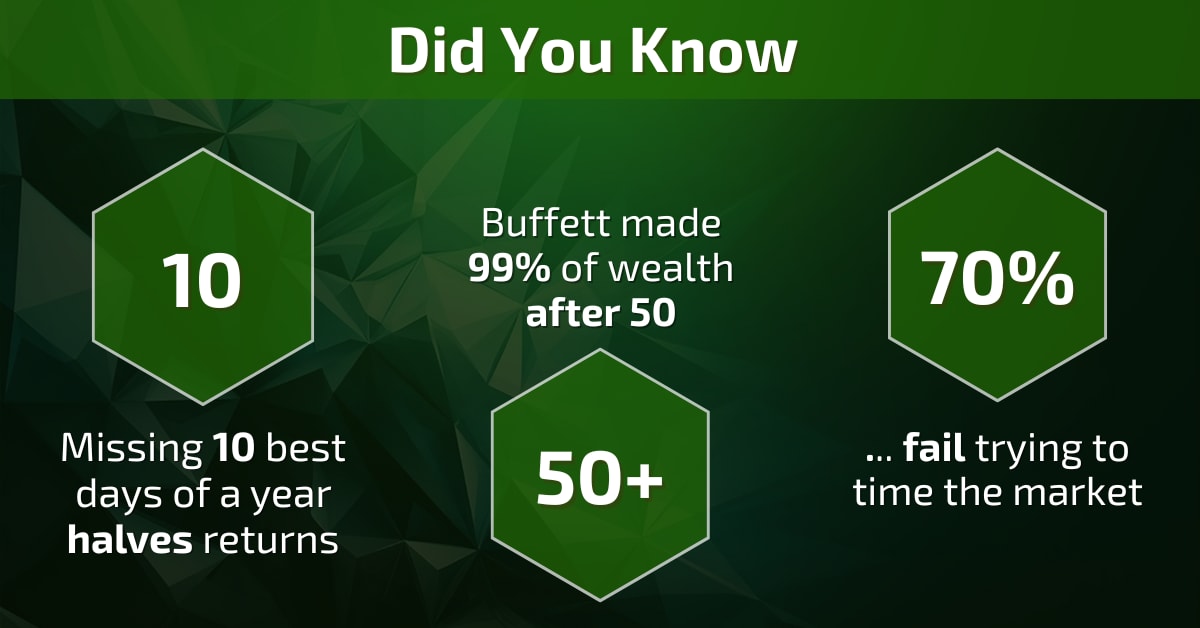
Compound growth is not linear. It accelerates over time. But only if you let it.
In the beginning, it feels slow. Gains are small. Progress is barely visible. But as the years go by, those early gains start generating new gains. And those create even more.
Suddenly, your portfolio isn’t growing by what you add. It’s growing by what it’s already made. That’s the moment where time flips the switch from slow grind to exponential climb.
Everyone wants to buy low and sell high. The problem is, almost no one knows when those points actually happen. Try to time the bottom and you’ll often miss the recovery. The best market days often come right after the worst ones. Miss a few of them and your returns can drop drastically.
While you're hesitating, the market moves on. And the cost of being out is higher than most people think.
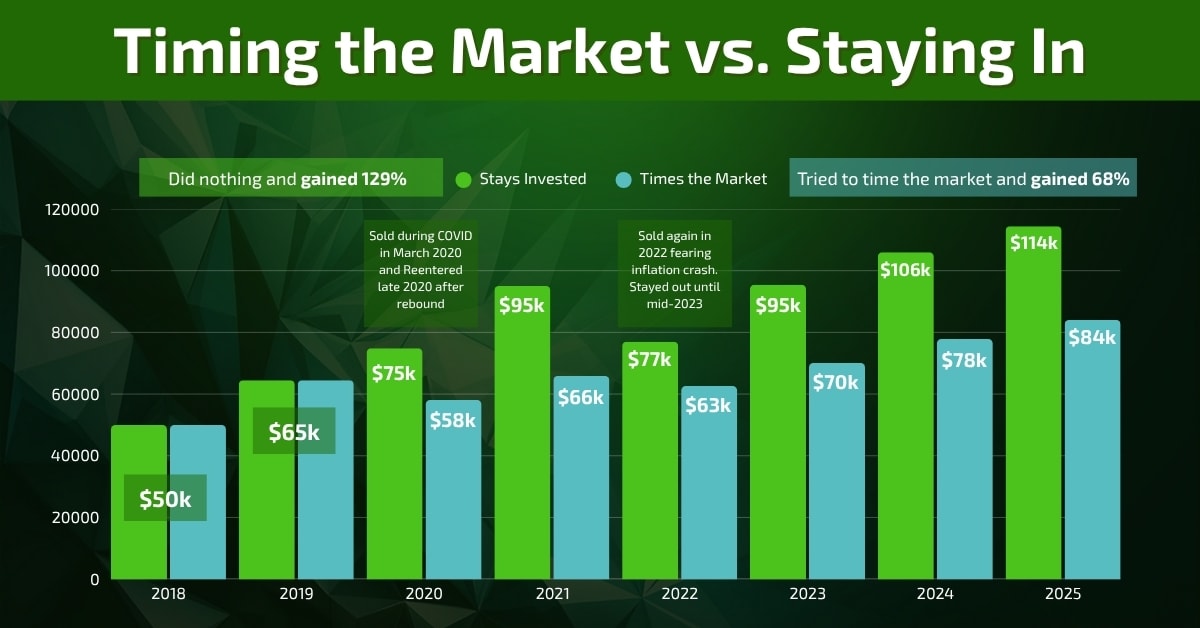
The investors who win aren’t the ones with the best instincts. They’re the ones who follow a plan and stay consistent. Investing regularly, even with small amounts, outperforms reactive strategies over time. It’s steady, repeatable progress. While others chase perfect timing, you’re quietly building real momentum. Each contribution moves you forward.
Core takeaways:
Next up: See how two nearly identical investors end up with very different results because of timing.
