Quick Start
How hidden fees quietly shrink your long-term gains


Every time you buy or hold an investment, there might be friction.
Some platforms charge commissions. Some funds charge you just for owning them. And some fees are baked into the price. Even if you’re not actively trading, you’re still paying something.
Not all fees are visible. Some are obvious. Others quietly reduce your gains behind the scenes.
This table shows where they hide and how they hit your returns.
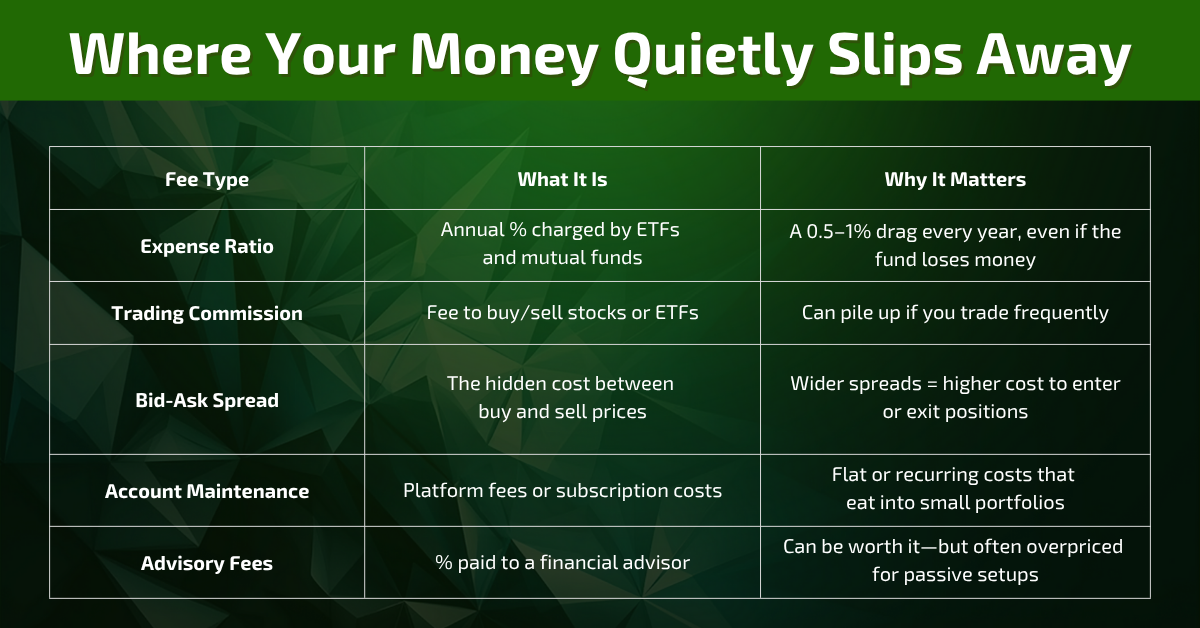
You don’t need to cut every cost. But you do need to know where they live. If you can name them, you can manage them. And that’s the first step toward optimizing your setup.
You don’t need to cut everything to zero. But you should cut what adds no value.
Smart investors reduce friction by using proven, cost-efficient setups. That doesn’t mean going cheap. It means choosing tools that work harder than they cost.
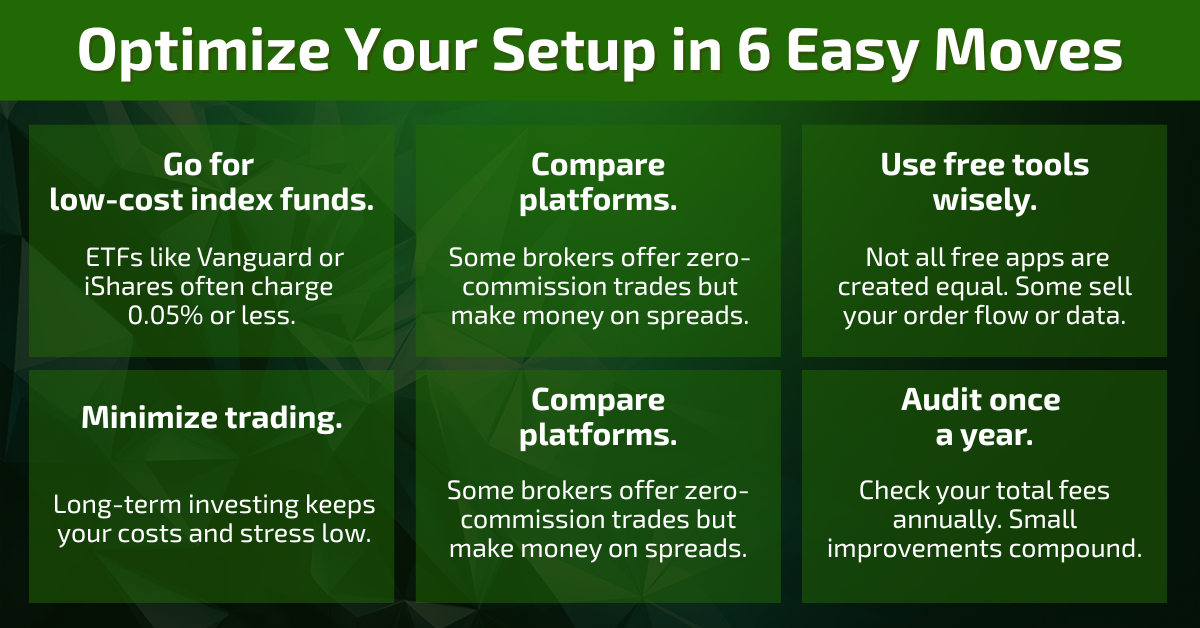
This isn’t about becoming a fee hawk. It’s about being deliberate. Because every dollar saved in fees is a dollar that keeps working for you, compounding quietly in the background.
Fees don’t have to be scary or confusing. The key is transparency.
Know what you're paying. Know why you’re paying it. And know what you’re getting in return.
If you’re paying a premium, it better deliver premium value. If not, cut it. Because compounding works both ways.
Core takeaways:
Next up: See what happens when investors ignore these fees, and how one small drag can derail an otherwise solid strategy.
