Quick Start
Discover why commodities drive markets


Every economy runs on raw materials.
Gold, oil, wheat, copper and corn may not sound exciting, but they are the fuel behind modern life.
Without energy, factories shut down. Without crops, shelves go empty.
Without metals, no buildings or electronics exist.
Commodities are not a side quest.
Think of every time in a game you tried to craft a weapon or upgrade armor, only to realize one rare material was missing. Progress stalls until you get it. Real life is no different.

When oil prices surge, transport and manufacturing costs spike across the board.
When grain prices rise, food inflation spreads quickly.
Commodities act like the levers beneath the economy, moving sectors in sync.
Investors watch them because they set the rhythm.
Energy prices shape margins, agricultural prices affect spending, and metals reflect industrial demand. They are not just background noise. They are signals of where the broader market is headed.
Not every raw material carries the same weight.
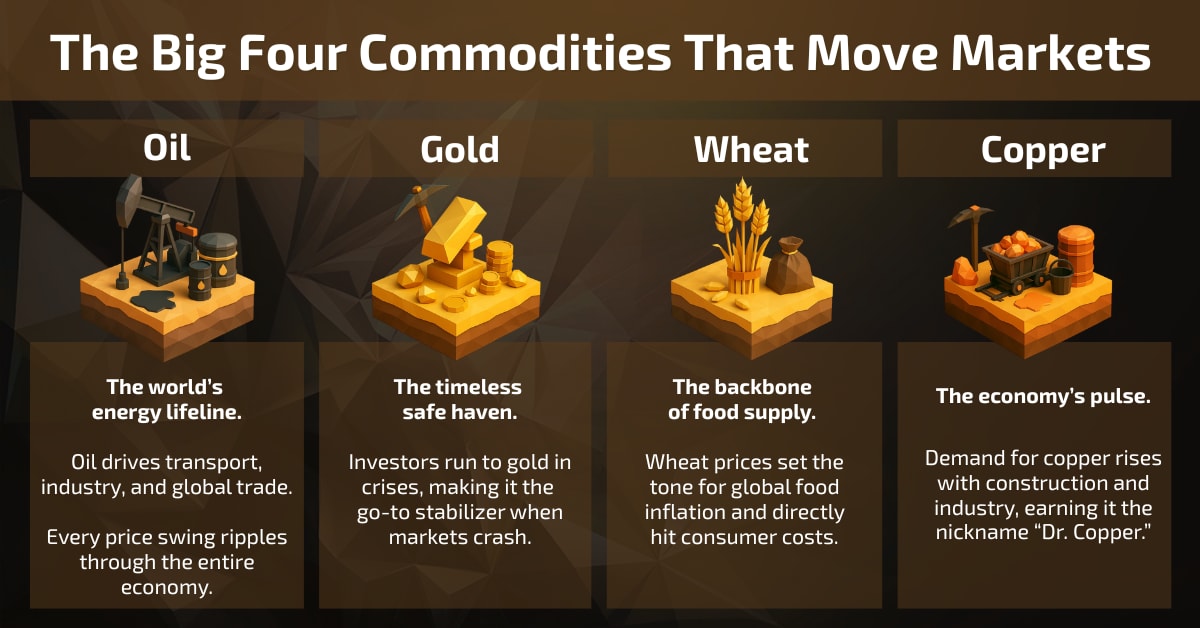
Oil is the lifeblood of global energy.
Gold acts as a safe haven whenever markets panic.
Wheat and corn determine food costs worldwide.
Copper is called “Dr. Copper” because its demand tracks economic growth.
Each of these plays a unique role, and together they reveal both stress and strength across the system.
Knowing which ones matter keeps you from drowning in endless ticker symbols.
Commodities can hedge risks or amplify returns.
Gold balances out equity downturns. Energy exposure benefits when demand rises.
Agricultural products protect against food inflation. The challenge is their volatility.
Weather events, political shifts and supply shocks hit commodities harder than most assets.
Investors typically access them through ETFs, futures or mining stocks instead of physical storage.
The strategy is simple: choose commodities as insurance or a high-risk bet on short-term trends.
Commodities are the gears turning quietly under every market move.
They influence prices, shape inflation, and offer investors both protection and risk.
Understanding them is not optional if you want to play the investing game with the full map revealed.
Ready to see how this plays out in real life? Time for the Use Case.
